HVAC Maintenance:
A Homeowner's Guide
Your HVAC system is the most expensive mechanical system in your home. Proper maintenance extends its life, lowers your energy bills, and keeps your family comfortable through South Jersey's humid summers and cold winters.
Your HVAC system works hard year round. In South Jersey, it runs nearly nine months out of the year, cooling your home through humid summers and heating it through freezing winters. That is a lot of demand on a single system, and it explains why HVAC failure is one of the most common and expensive home emergencies.
A new HVAC system costs $5,000 to $12,000 or more. A major repair like a compressor failure can run $1,500 to $3,000. But here is the good news: most HVAC problems are preventable with simple, consistent maintenance. The money you spend on regular maintenance is the best investment you can make in your home's comfort and your energy bills.
This guide covers everything you need to know about maintaining your HVAC system, from the monthly tasks you can do in five minutes to the professional tune-ups that keep everything running efficiently. Whether you have a brand new system or one that is getting up there in years, these practices will help you get the most out of it.
Why Regular HVAC Maintenance Matters
Skipping HVAC maintenance is the most common and costly mistake homeowners make. Here is what is at stake.
A well-maintained HVAC system uses 15 to 20 percent less energy than a neglected one. A dirty filter alone can increase energy consumption by 5 to 15 percent. In South Jersey, where summer cooling bills can exceed $300 per month, that adds up fast. Over a year, regular maintenance can save you $200 to $500 on energy costs.
A neglected HVAC system typically lasts 10 to 12 years. A well-maintained system can last 18 to 20 years. That is 8 to 10 extra years before you face a $5,000 to $12,000 replacement cost. The math is straightforward: $200 per year in maintenance extends the life of a $10,000 investment by nearly a decade.
Your HVAC system circulates the air you breathe. A dirty filter, moldy evaporator coil, or clogged drain line can pump dust, allergens, mold spores, and bacteria throughout your home. This is especially important in South Jersey, where humidity promotes mold growth. Regular maintenance keeps your indoor air clean and healthy.
Your HVAC system is most likely to fail on the hottest day of summer or the coldest night of winter, when it is working hardest. A professional tune-up catches small problems before they become emergency failures. A $20 capacitor that costs $200 to replace during a tune-up becomes a $1,500 emergency service call on a holiday weekend when the compressor fails because the capacitor did not do its job.
Monthly HVAC Tasks
These tasks take less than five minutes and cover the most common causes of HVAC problems. Set a monthly reminder on your phone.
Change or Clean the Air Filter
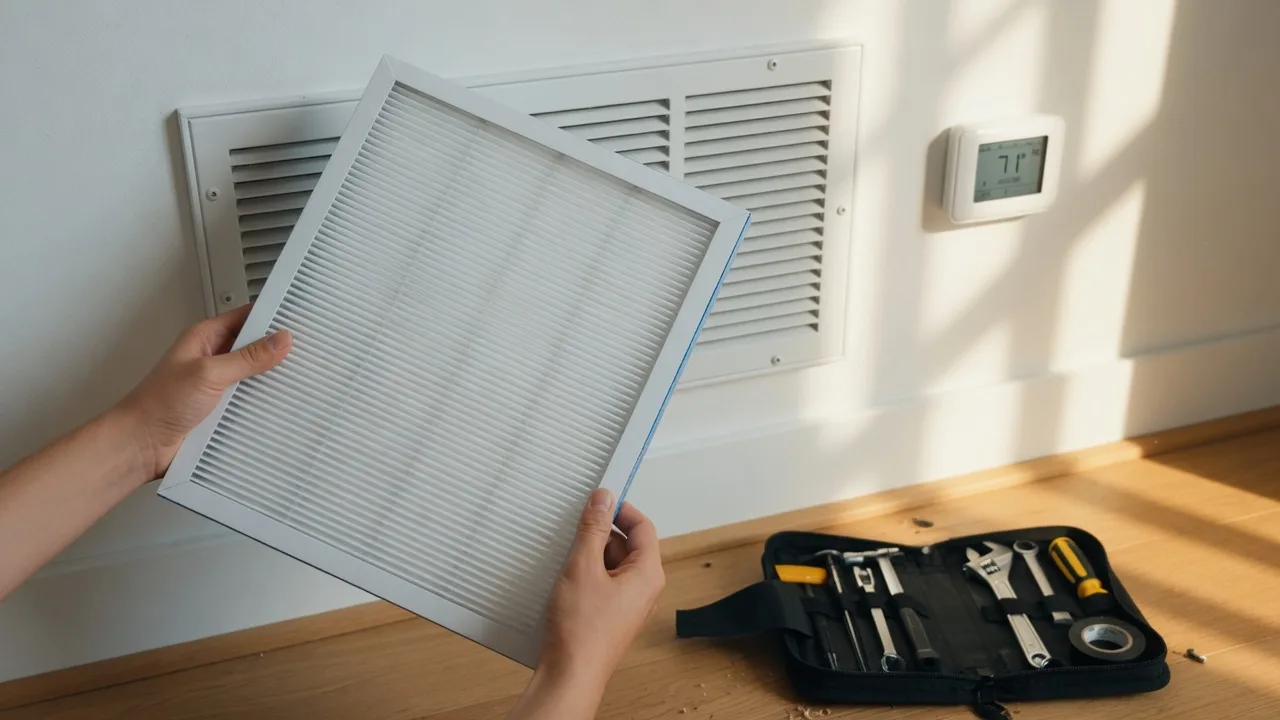
This is the single most important maintenance task for your HVAC system. A dirty filter restricts airflow, making your system work harder, reducing efficiency, and potentially causing the evaporator coil to freeze. Check your filter monthly and replace it when it looks dirty. Basic fiberglass filters: replace every 30 days. Pleated filters (MERV 4 to 8): replace every 60 to 90 days. High-efficiency filters (MERV 11 or higher): replace every 60 to 90 days, but check monthly. If you have pets, change filters more often. Buy filters in a six-pack so you always have a spare on hand. A three-pack of quality filters costs $15 to $30.
Check Vents and Registers
Walk through your home and make sure all supply vents and return registers are open and unobstructed. Furniture, curtains, rugs, and toys can block airflow. A blocked vent makes your system work harder and can cause pressure imbalances that lead to duct leaks. Also check for dust buildup on return grilles and vacuum them if needed.
Listen for Unusual Noises
When your system turns on, listen for any new or unusual sounds. Banging, squealing, grinding, rattling, or hissing noises can indicate loose components, worn belts, refrigerant leaks, or motor problems. If you hear something unusual, note which area it is coming from and call an HVAC professional for a diagnostic. Catching a noise early can prevent a full system failure.
Seasonal HVAC Prep
South Jersey's climate demands seasonal preparation. Spring AC prep and fall heating prep are essential rituals for every homeowner.
Spring AC Prep
Before the first hot day, schedule a professional AC tune-up. While you wait, here is what you can do. Clear at least two feet of space around your outdoor condenser unit. Trim back any vegetation that has grown over the winter. Remove leaves, debris, and dirt from the unit. Gently hose off the fins with a garden hose, spraying from the inside out. Never use a pressure washer, which can bend the delicate fins. Turn off power to the unit at the disconnect switch before cleaning. Check that the unit is level on its concrete pad. If it has shifted, call a professional to re-level it. Replace the air filter before the first use. Turn the system on and let it run for 15 minutes, checking that cool air is coming from all vents.
Fall Heating Prep
Before the first cold snap, schedule a professional heating tune-up. For gas furnaces, the technician will check the heat exchanger for cracks, clean the burner assembly, test the ignition system, and check for carbon monoxide leaks. For heat pumps, the technician will check refrigerant levels, clean the coils, and test the reversing valve. Before the appointment, replace the air filter and clear the area around the indoor unit. If you have a gas furnace, check that the exhaust vent outside is clear of snow, leaves, and animal nests. Test your carbon monoxide detectors and replace batteries. If you have a gas furnace, you should have a carbon monoxide detector on every floor, including the basement.
What a Professional Tune-Up Includes
A professional HVAC tune-up typically costs $100 to $200 per visit. Here is what a thorough technician should do.
Signs Your HVAC System Needs Attention
Your HVAC system usually gives warning signs before it fails. Here is what to watch for.
Unusual Noises
Banging, squealing, grinding, or rattling sounds indicate loose components, worn belts, or motor problems. Do not ignore them. A small problem today is a major failure tomorrow.
Weak Airflow
If air is barely coming out of your vents, the issue could be a clogged filter, a failing blower motor, or blocked ductwork. Check the filter first. If that does not solve it, call a professional.
Uneven Temperatures
If one room is significantly warmer or cooler than others, you may have ductwork issues, a failing zone damper, or an undersized system. This is worth having a professional evaluate.
Higher Energy Bills
A sudden spike in your energy bill without a change in your usage habits often means your system is working harder than it should. A professional tune-up can identify the cause and restore efficiency.
Frequent Cycling
If your system turns on and off frequently, it may be short-cycling. This wastes energy, increases wear, and can indicate a refrigerant problem, a dirty filter, or an oversized system.
Strange Smells
Burning smells when the heat first turns on in fall are normal as dust burns off. But persistent musty smells indicate mold in the system, and gas odors or metallic smells require immediate professional attention.
When to Repair vs. Replace
Every HVAC system eventually needs replacement. The question is whether to invest in repairs or put that money toward a new system. Here is a framework to help you decide.
A common rule of thumb: if the repair cost multiplied by the age of the system exceeds $5,000, replace it. For example, a 10-year-old system with a $600 repair (10 x $600 = $6,000) is a candidate for replacement. A 5-year-old system with the same repair (5 x $600 = $3,000) is worth repairing.
If your system is 12 to 15 years old or older, replacement is usually the better financial choice. A new system will be more efficient, more reliable, and come with a warranty. The energy savings alone can offset a significant portion of the monthly payment if you finance the replacement.
If your system uses R-22 refrigerant (common in systems manufactured before 2010), repair costs will be high because R-22 is being phased out and is expensive. If your R-22 system needs a refrigerant-related repair, replacement is almost always the right call. Newer systems use R-410A, which is more efficient and environmentally friendly.
If your current system has a SEER rating of 10 or lower (standard before 2006), upgrading to a modern system with a SEER rating of 16 or higher can cut your cooling energy costs by 30 to 50 percent. In South Jersey's hot summers, that is a significant annual savings. Factor the energy savings into your replacement decision.
South Jersey experiences both hot, humid summers and cold winters. A heat pump can handle both seasons efficiently, but in older homes, a gas furnace paired with a central AC may be more practical. The choice depends on your home's existing infrastructure, your energy costs, and your comfort preferences. A trusted HVAC contractor can help you evaluate the best option for your specific home.
South Jersey Climate Considerations
Our climate in Burlington County and South Jersey puts unique demands on your HVAC system. Here is what to keep in mind.
South Jersey summers are muggy. Your AC system removes humidity from the air, which is just as important as cooling. If your system feels like it is running all the time but the house still feels sticky, the system may be oversized for your home, have a refrigerant issue, or have a problem with the condensate drain. Proper humidity control is essential for comfort and for preventing mold growth.
Winter temperatures in South Jersey regularly drop below freezing, and cold snaps can bring single-digit temperatures. Your heating system must be reliable. Gas furnaces are common and work well in our climate. Heat pumps can be efficient but struggle in extreme cold unless they are cold-climate rated with backup electric resistance heat. If you have a heat pump and it is struggling to keep up during a cold snap, the backup heat strips will kick in, but they are expensive to run.
Spring and fall in South Jersey bring temperature swings that can change 30 degrees in a single day. A programmable or smart thermostat helps your system handle these transitions efficiently. Set it and forget it. Schedule your professional tune-ups in April and October, before the peak seasons, so your system is ready for the extremes.
Key Takeaways
Change your air filter monthly. It is the single most important maintenance task and takes two minutes. A dirty filter causes most HVAC problems.
Schedule professional tune-ups twice a year: spring for AC, fall for heating. Each visit costs $100 to $200 and pays for itself in energy savings and extended system life.
Keep your outdoor condenser unit clear of debris and vegetation. At least two feet of clearance on all sides ensures proper airflow.
Use the 5,000 rule to decide whether to repair or replace. If repair cost times system age exceeds $5,000, replacement is usually the better choice.
Listen to your system. Unusual noises, weak airflow, uneven temperatures, and higher energy bills are warning signs that should not be ignored.
Have an HVAC Question?
Not sure if your system needs a repair or a replacement? Ask Bob for an honest opinion. Or find a trusted HVAC professional through the HomeCircle Trusted Partners directory.
Related Handbook Articles
Common Plumbing Problems and How to Handle Them
Running toilets, dripping faucets, slow drains, and water heater issues every homeowner faces.
Read ArticleSetting Up Your Home Maintenance Schedule
Monthly, seasonal, and annual checklists to keep your whole home running smoothly.
Read ArticleWhen to DIY vs. Call a Professional
A practical framework for deciding home repair strategy with cost comparisons.
Read Article