Common Plumbing Problems
and How to Handle Them
Plumbing issues are the most common home emergencies. Here is what you can fix yourself, when to call a plumber, and how to prevent the problems that cause the most damage.
The sound of a running toilet at 2 a.m. A puddle spreading across the kitchen floor. A shower that drains slower every day. Plumbing problems are among the most common and most stressful issues homeowners face. They can start small and turn catastrophic in a hurry.
The good news is that many plumbing problems have simple fixes you can handle yourself. The key is knowing which ones are safe to DIY and which require a licensed plumber. This guide covers the most common plumbing issues South Jersey homeowners deal with, from running toilets to frozen pipes, and gives you clear guidance on what to do for each one.
Before we get into specific problems, here is the most important thing you need to know: find your main water shutoff valve today, not during an emergency. It is usually located in your basement, crawlspace, garage, or near your water heater. Show every member of your household where it is and how to turn it off. In a burst pipe emergency, every second counts.
Running Toilets
A running toilet is the most common plumbing problem and one of the easiest to fix. It is also one of the most wasteful: a running toilet can waste up to 200 gallons of water per day, adding $50 to $100 or more to your monthly water bill.
The flapper is the rubber valve at the bottom of the toilet tank that lifts when you flush and seals shut when the tank refills. Over time, the rubber gets brittle or warped, and water leaks past it into the bowl. This is what causes that intermittent running sound. Replacing a flapper costs $5 to $10 at any hardware store. Remove the old flapper, take it with you to the store to match the size and shape, and install the new one following the package instructions. The job takes 15 minutes.
If replacing the flapper does not fix the problem, check the fill valve (the vertical assembly on the left side of the tank). A faulty fill valve can cause the tank to overfill and water to spill into the overflow tube. Adjust the float arm or replace the fill valve assembly for $10 to $20. Also check the chain connecting the flush handle to the flapper. If it is too short, it prevents the flapper from sealing. If it is too long, it can get caught under the flapper. Adjust it so there is about a quarter inch of slack.
Add a few drops of food coloring to the toilet tank. Do not flush. Wait 15 to 30 minutes. If you see colored water in the toilet bowl, you have a leak past the flapper. This test catches leaks you cannot hear. A silent leak can waste just as much water as a noisy one.
Dripping Faucets
A dripping faucet is more than an annoyance. One drip per second adds up to over 3,000 gallons of water wasted per year. The cause is usually a worn washer, O-ring, or cartridge inside the faucet handle.
These older-style faucets use rubber washers that wear out over time. To fix a dripping compression faucet, turn off the water supply under the sink, remove the handle, unscrew the valve stem, and replace the rubber washer. Take the old washer to the hardware store to match the size. A washer pack costs $3 to $5. This is a beginner-friendly repair.
Modern single-handle faucets use a cartridge or ceramic disc mechanism. If the faucet drips from the spout, the cartridge likely needs replacing. If it leaks from the handle base, the O-rings are worn. Cartridges are specific to each faucet brand and model. Search for your faucet brand and model number (usually stamped on the base) to find the right replacement part. This is a moderate-difficulty DIY job. If you cannot find the right cartridge or the faucet is more than 10 years old, replacing the entire faucet may be easier and more cost-effective.
Slow Drains
Slow drains are frustrating, but they are not always a sign of a serious problem. Here is when plunging works and when you need a professional.
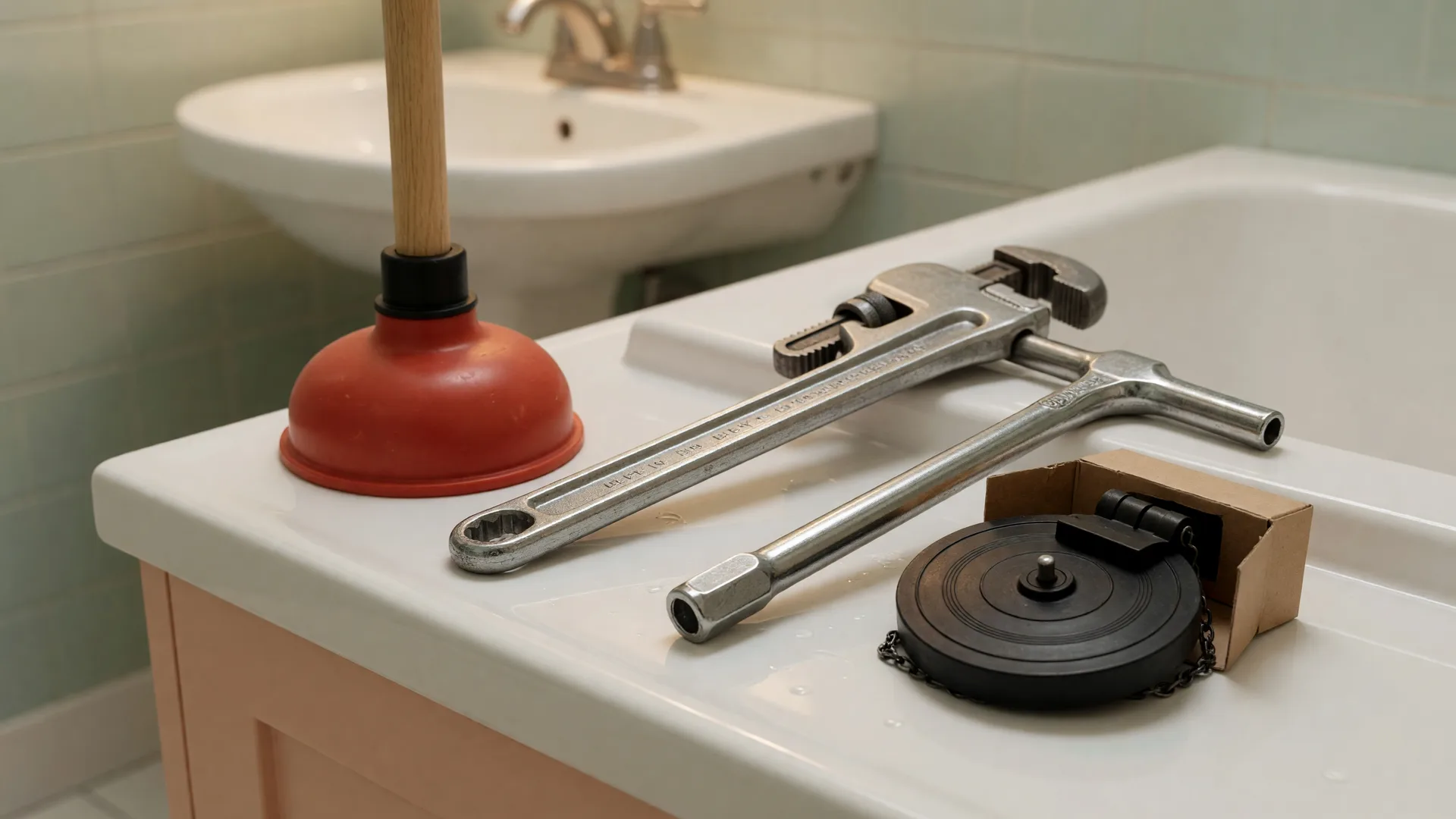
If one sink or one tub is draining slowly, the clog is likely in that fixture's trap or drain line. A plunger often clears it. For sinks, block the overflow opening with a wet rag to create a proper seal. For tubs, use a tub plunger that creates a better seal. If plunging does not work, try a drain snake (also called a plumber's snake or auger). These are available at any hardware store for $10 to $30. Feed the snake into the drain until you feel resistance, then crank it to break up the clog. Never use chemical drain cleaners. They are harsh on your pipes, bad for the environment, and often do not fully clear the clog, leaving you with a partially cleared drain that clogs again faster.
If multiple fixtures are draining slowly at the same time (for example, the kitchen sink and the bathroom sink and the tub), the clog may be in your main sewer line. This is a professional job. Other signs of a main sewer line problem include gurgling sounds from drains or toilets when you run water, water backing up in one fixture when you use another, and sewage odors. A plumber can diagnose the issue with a camera inspection, which costs $200 to $500. Rooter services to clear the main line cost $200 to $600 depending on the severity. In older South Jersey homes with clay or cast iron sewer pipes, tree root intrusion is a common cause of main line clogs.
Most garbage disposals have a reset button on the bottom. If the disposal hums but does not spin, the motor may have tripped its thermal overload. Wait a few minutes, then press the reset button. If it still does not work, check for a jam by turning off the power and using the included hex wrench or a wooden broom handle to manually rotate the flywheel from the bottom. Never put your hand inside a garbage disposal. And remember: coffee grounds, eggshells, potato peels, pasta, rice, and grease are hard on disposals and should go in the trash or compost instead.
Water Heater Issues
Your water heater works quietly in the background until something goes wrong. Here are the most common issues and what they mean.
Not Enough Hot Water
If your water heater is running out of hot water faster than it used to, the issue could be sediment buildup in the tank, a broken heating element (in electric heaters), or a faulty thermostat. Start by flushing the tank (see the maintenance schedule guide for instructions). If flushing does not help, call a plumber to test the heating elements and thermostat. Also check if your water heater is sized correctly for your household. A family of four typically needs a 50-gallon tank.
Strange Noises
Popping, crackling, or rumbling sounds from your water heater are a sign of sediment buildup. As sediment hardens at the bottom of the tank, water gets trapped underneath and boils, creating those noises. Flushing the tank usually solves it. If the noises persist or get worse, the tank may be deteriorating and nearing the end of its life. Water heaters typically last 8 to 12 years. If yours is approaching that age and making noises, start budgeting for a replacement.
Age and Replacement Considerations
A standard water heater lasts 8 to 12 years. If yours is older than 8 years, it is living on borrowed time. Consider replacing it proactively before it fails unexpectedly, especially in winter when a cold shower is more than an inconvenience. In South Jersey, a new 50-gallon water heater installed costs $800 to $1,500. A tankless water heater costs $1,500 to $3,500 installed but offers endless hot water and better energy efficiency. If your water heater is in a basement or garage, replacement is straightforward. If it is in an attic or crawlspace, expect higher labor costs.
Frozen Pipe Prevention
Frozen pipes are a serious concern for South Jersey homeowners. When water freezes, it expands and can burst your pipes, causing thousands of dollars in water damage. A single burst pipe can release 250 gallons of water per day.
Insulate exposed pipes in your basement, crawlspace, and attic with foam pipe insulation, available at any hardware store for $1 to $3 per six-foot section. Disconnect and drain garden hoses before the first freeze. Close indoor shutoff valves for outdoor spigots and leave the outdoor spigots open to allow any remaining water to drain. Seal gaps around pipes where they enter your home with caulk or expanding foam to keep cold air out. Let faucets drip slowly during extreme cold snaps (temperatures below 20 degrees Fahrenheit). Moving water is much less likely to freeze.
If you turn on a faucet and only a trickle comes out, you may have a frozen pipe. Leave the faucet open. Apply gentle heat to the frozen section using a hair dryer, heating pad, or space heater. Never use an open flame, blowtorch, or propane heater. Start warming the pipe closest to the faucet and work your way back toward the frozen section. As the ice melts, water will begin to flow, which helps melt the remaining ice. Continue applying heat until full water pressure returns. If you cannot access the frozen section or are unsure where the blockage is, call a plumber.
No water or very low water pressure from a faucet. Frost on visible pipes. Unusual smells from a faucet or drain (if the pipe is cracked, water may be leaking into a hidden space where it can cause mold). Strange sounds when you turn on the water. Bulging or visible cracks in a pipe. If you suspect a pipe has already burst, shut off your main water valve immediately and call a plumber.
When It Is an Emergency
Some plumbing problems require immediate action. Knowing what counts as an emergency and what to do can save your home from serious damage.
Burst Pipes
Immediately shut off the main water valve. Open all faucets to drain the system and relieve pressure. Call an emergency plumber. Start cleanup with towels, wet vacs, and fans to minimize water damage. If water has soaked into drywall, baseboards, or flooring, you may need a water damage restoration service. Document the damage with photos for your insurance claim. A burst pipe is a genuine emergency that requires professional help.
Sewage Backup
If wastewater is backing up into sinks, tubs, or toilets, stop using all water immediately. Do not flush toilets or run any faucets. Call a plumber right away. Sewage backup is a health hazard and requires professional cleanup. Wear gloves and boots if you must be in the affected area, and keep children and pets away. The cause is typically a blocked main sewer line that requires professional snaking or hydro-jetting.
No Hot Water in Winter
While not as urgent as a burst pipe, a water heater failure in winter is a priority repair. If you have no hot water and your home has children, elderly residents, or anyone with health conditions, call a plumber promptly. Check if it is a simple issue first: a tripped circuit breaker for electric heaters, a pilot light that has gone out for gas heaters, or the thermostat accidentally turned down. If none of those are the cause, professional diagnosis is needed.
Key Takeaways
Know where your main water shutoff valve is and show everyone in your household how to use it. This one step can save you thousands in water damage.
Running toilets, dripping faucets, and single-fixture slow drains are usually easy DIY fixes that save significant money.
Multiple slow drains, sewage odors, or gurgling sounds suggest a main sewer line problem that requires a professional plumber.
Prevent frozen pipes in South Jersey winters by insulating exposed pipes, disconnecting hoses, sealing gaps, and letting faucets drip during extreme cold.
Emergency plumbing situations require immediate action: shut off water, call a professional, and document damage for insurance.
Have a Plumbing Question?
Not sure if your plumbing issue is a DIY fix or needs a pro? Ask Bob for a quick, honest opinion. Or browse the HomeCircle Trusted Partners directory for vetted plumbers in your area.
Related Handbook Articles
When to DIY vs. Call a Professional
A framework for deciding home repair strategy with cost comparisons and licensing rules.
Read ArticleHVAC Maintenance: A Homeowner's Guide
Monthly, seasonal, and professional HVAC maintenance tasks tailored to South Jersey's climate.
Read ArticleSetting Up Your Home Maintenance Schedule
Monthly, seasonal, and annual checklists to keep your home running smoothly.
Read Article