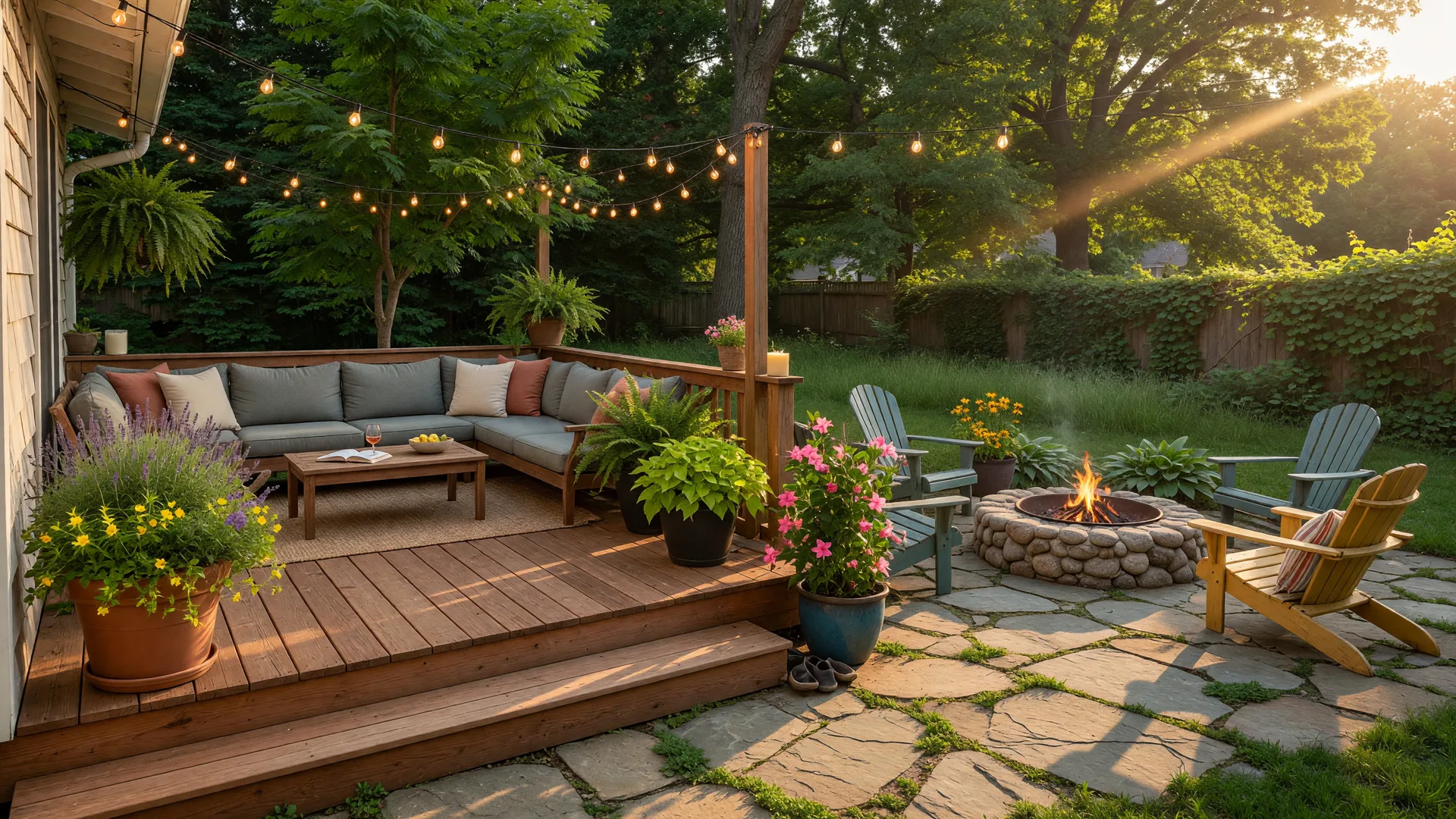
Outdoor Living Spaces:
Patios, Decks, and Landscaping
Your outdoor space is an extension of your home. A well-designed deck, patio, or landscaped yard creates a place to relax, entertain, and enjoy South Jersey's beautiful seasons.
There is something special about a well-designed outdoor space. It is where morning coffee tastes better, where summer evenings stretch into laughter-filled nights around a fire, and where the line between indoor comfort and outdoor freedom blurs into something truly enjoyable.
For South Jersey homeowners, outdoor living spaces are more than just a luxury. In a region blessed with four distinct seasons, including beautiful springs, warm summers, and crisp falls, a thoughtfully designed yard can extend your usable living space by months each year. And when it comes time to sell, a great outdoor space can be a powerful differentiator in a competitive market.
This guide covers everything you need to know about designing and building outdoor living spaces in Burlington County and South Jersey. From choosing between a deck and a patio to navigating local permitting, we will help you create an outdoor space you will love for years to come.
Deck vs. Patio: Cost, Maintenance, and Lifespan
The first decision you will face is whether to build a deck or a patio. Both have their strengths, and the right choice depends on your property, your budget, and how you plan to use the space.
Decks
A deck is an elevated wooden or composite platform attached to your home. Decks are ideal for sloped properties where a patio would require extensive excavation. They create a natural transition from indoor to outdoor living, especially when built at the same level as your first floor.
Pressure-treated wood decks cost $15 to $25 per square foot installed. A 300-square-foot deck runs $4,500 to $7,500. Composite decking, made from wood fibers and recycled plastic, costs $25 to $40 per square foot installed, or $7,500 to $12,000 for the same size. Composite requires less maintenance, never needs staining, and lasts 20 to 25 years, compared to 10 to 15 years for wood. For South Jersey's humid climate, composite decking is often the better long-term investment.
Patios
A patio is a ground-level surface made from poured concrete, pavers, or natural stone. Patios are generally less expensive than decks and require less ongoing maintenance. They work best on flat or gently sloping properties and can be built in any shape or pattern.
A poured concrete patio costs $6 to $12 per square foot installed. Concrete pavers cost $10 to $20 per square foot. Natural stone like flagstone or bluestone costs $15 to $30 per square foot. A 300-square-foot paver patio runs $3,000 to $6,000. Patios last 20 to 30 years with proper installation and minimal maintenance. In South Jersey, a proper base of compacted gravel and sand is essential to prevent settling and cracking during freeze-thaw cycles.
Making the Choice
Choose a deck if your yard slopes away from the house, you want to step directly from your first floor onto the outdoor space, or you prefer the look and feel of wood or composite. Choose a patio if your yard is relatively flat, you want the lowest cost per square foot, or you prefer a stone or concrete surface. Many homeowners choose both. A deck off the back door for everyday use and a patio lower down with a fire pit for entertaining.
South Jersey Climate Considerations for Outdoor Materials
South Jersey's climate presents specific challenges for outdoor materials. Hot, humid summers with frequent thunderstorms, cold winters with freeze-thaw cycles, and the occasional hurricane remnant mean your materials need to be chosen with durability in mind.
Wood Selection
Pressure-treated pine is the most common decking material in South Jersey, and for good reason. It is affordable, naturally rot resistant, and readily available. The downside is that it requires regular maintenance, including cleaning and sealing every one to two years. Cedar and redwood are naturally resistant to rot and insects and have a beautiful appearance, but they cost more and are less commonly available in the region.
Composite and PVC Decking
Composite decking has become the top choice for South Jersey homeowners who want low maintenance and long life. Brands like Trex, TimberTech, and Fiberon offer products that resist moisture, mold, and fading. Premium products with a PVC cap offer the best stain and scratch resistance. The initial cost is higher than wood, but the elimination of annual staining and sealing makes composite the better value over the life of the deck.
Concrete and Paver Durability
For patios, concrete is durable but can crack over time as the ground shifts with freeze-thaw cycles in South Jersey winters. Concrete pavers are the better choice for our climate. They are designed to flex slightly with ground movement, and individual pavers can be replaced if they crack. A proper base of compacted gravel and sand, installed by an experienced contractor, is essential for longevity.
Moisture and Mold Resistance
South Jersey's humidity creates conditions for mold and mildew growth on outdoor surfaces. Choose materials with built-in moisture resistance, especially for covered porches and shaded areas where moisture lingers longer. Composite decking, PVC trim, and aluminum railing systems all resist moisture better than wood. If you choose wood, proper sealing and good airflow underneath the deck are essential to prevent rot.
Permits and Building Codes for Decks and Patios
Building an outdoor living space requires more than just a vision. In South Jersey, you need to navigate township permits, building codes, and zoning regulations. Skipping this step can lead to fines, forced removal of your structure, and problems when you try to sell your home.
When You Need a Permit
In most Burlington County townships, you need a permit for any deck that is more than 30 inches above grade, any patio that involves excavation or changes to drainage, and any structure that is attached to your home. Even if your project does not technically require a permit, it is always a good idea to check with your local building department. The cost of a permit is modest compared to the cost of being told to tear down an unpermitted structure.
Setback Requirements
Every township has setback requirements that determine how close a structure can be to property lines, roads, and other structures. In most South Jersey towns, decks and patios must be set back at least 10 to 15 feet from side and rear property lines. Corner lots have additional restrictions. Your local zoning office can provide the specific setback requirements for your property.
Building Code Requirements
Decks are subject to the New Jersey Building Code, which specifies requirements for footings, posts, beams, joists, decking, railing, and stairs. Railing must be at least 36 inches high for most decks, with balusters spaced no more than four inches apart. Stairs must have consistent riser heights and adequate tread depth. These requirements exist for safety, and a licensed contractor will know how to meet them.
HOA Restrictions
If you live in a community with a homeowners association, check your HOA rules before building. Many HOAs have strict guidelines for deck and patio materials, colors, heights, and locations. Some require architectural review and approval before construction begins. Ignoring HOA rules can lead to fines and a requirement to remove or modify your structure at your own expense.
Landscaping That Increases Property Value
Landscaping is one of the few home improvements that can deliver a return of 70 to 100 percent or more. A well-landscaped yard makes a home feel established, cared for, and welcoming. It is the first thing buyers see, and it sets the tone for everything that follows.
Front Yard Landscaping
Front yard landscaping has the highest impact on curb appeal and resale value. Focus on a healthy, well-maintained lawn, trimmed shrubs and bushes, fresh mulch in garden beds, and a tidy walkway to the front door. Foundation plantings that frame the entrance without blocking windows are a classic choice for South Jersey homes.
Mature trees add significant value to a property. A large shade tree in the front yard can reduce cooling costs in the summer and increase home value by 3 to 5 percent. If you do not have mature trees, consider planting native species like red maple, river birch, or white oak, which thrive in South Jersey's climate and soil conditions.
Backyard Landscaping
Backyard landscaping matters for enjoyment and resale, but it has less impact on the initial buyer impression than the front yard. Focus on creating defined zones for different activities: a seating area, a dining area, a play area for kids, and space for gardening if that is important to you. Native plants that are drought tolerant and low maintenance are the best choice for South Jersey backyards.
Low-Maintenance Landscaping
Buyers increasingly value low-maintenance landscaping. A yard that looks beautiful without requiring hours of weekly work is a strong selling point. Consider native perennials that come back year after year, ornamental grasses that require minimal watering, and ground covers that reduce the lawn area you need to mow. A well-planned low-maintenance landscape can be just as beautiful as a high-maintenance one.
Average Costs in South Jersey
Basic landscaping cleanup, including mowing, trimming, mulching, and weeding, costs $200 to $500 from a professional service. A more comprehensive project with new plantings, bed design, and hardscaping runs $1,500 to $5,000. For most homeowners, focusing on a clean, tidy, well-maintained yard is the right approach. If you are planning to sell, spending $500 to $1,000 on professional landscaping is one of the best investments you can make.
Outdoor Lighting: Safety and Ambiance
Outdoor lighting serves two purposes: it keeps your family and guests safe, and it creates the mood that makes your outdoor space inviting after dark. A well-lit yard extends the hours you can use and enjoy your outdoor space.
Safety Lighting
Safety should be your first priority. Path lights along walkways, driveways, and garden paths prevent trips and falls. Step lights on stair risers make deck stairs visible at night. Post lights at the base of deck stairs and at changes in elevation provide essential visibility. Motion-activated flood lights near entrances, garages, and dark corners of the yard add security and deter prowlers.
Ambient and Accent Lighting
Once safety is covered, focus on creating ambiance. String lights hung across a patio or deck create a warm, inviting glow that is perfect for entertaining. Uplights at the base of trees or garden features add drama and depth. Downlights from eaves or pergolas cast a gentle light that feels natural. Lanterns and candles on tables add a soft flickering light that makes any gathering feel special.
Low-Voltage and Solar Options
Low-voltage landscape lighting is energy efficient, safe to install, and relatively inexpensive. A basic low-voltage transformer costs $30 to $80, and individual path lights cost $10 to $40 each. Solar lights have improved significantly and are a good option for areas that get direct sunlight. They require no wiring and install in minutes. For consistent, reliable lighting, a low-voltage system is the better choice.
Smart Lighting Controls
Smart outdoor lighting lets you control your lights from your phone, set schedules, and create scenes for different activities. A smart outdoor plug costs $15 to $30 and turns any standard light into a smart light. Timer-based controls turn lights on at dusk and off at a set time. For the best experience, consider a professionally installed lighting system with a centralized control panel.
Fencing: Options, Costs, and NJ Regulations
A fence provides privacy, security, and defines your outdoor space. It is one of the most practical additions you can make to your yard, and it adds value for buyers who value privacy and defined boundaries.
Fence Material Options
The most affordable option. Requires staining or sealing every two to three years. Typical lifespan is 10 to 15 years in South Jersey's climate.
Naturally rot resistant with a beautiful appearance. Can be left to weather naturally or stained. Lifespan of 15 to 20 years.
Virtually maintenance free. Does not rot, warp, or require painting. Typical lifespan is 20 to 30 years. Higher upfront cost but lower lifetime cost.
Elegant and durable. Typically used for pool enclosures and front yards where visibility is desired. Virtually maintenance free.
New Jersey Fence Regulations
New Jersey allows fences up to four feet high in front yards and up to six feet high in side and back yards. Some townships have stricter limits. Fences must be installed with the finished side facing outward. Property lines must be clearly identified before installation, and it is your responsibility to confirm that you are building on your own property, not your neighbor's. A survey is recommended before building a fence.
Fence Maintenance
Wood fences require regular maintenance to stay looking good and functioning properly. Pressure-treated pine should be stained or sealed every two to three years. Cedar can be left to weather naturally, but it will turn gray over time. Vinyl and aluminum fences require only occasional cleaning with a garden hose and mild detergent. Choose your material based on how much maintenance you are willing to commit to.
Creating Year-Round Outdoor Enjoyment in South Jersey
South Jersey has beautiful weather for much of the year, but the seasons each bring their own opportunities and challenges. With the right features, you can enjoy your outdoor space from early spring through late fall, and even into winter on milder days.
Spring
Spring in South Jersey is gorgeous, but it can be wet. A covered porch or pergola with a clear polycarbonate roof lets you enjoy the outdoors even during April showers. Early spring is also the time to prepare your yard for the growing season. Clean up winter debris, refresh mulch, prune shrubs, and plant cool-season flowers like pansies and violas.
Summer
Summer is prime outdoor season in South Jersey. A patio with a shade umbrella, a pergola with climbing vines, or a covered porch provides relief from the midday sun. A fire pit becomes a gathering spot for evening s'mores and conversation. Ceiling fans on covered porches keep the air moving on hot, humid days. For the ultimate summer enjoyment, consider an outdoor kitchen with a grill, prep space, and a mini fridge.
Fall
Fall in South Jersey is spectacular, with crisp air, brilliant foliage, and comfortable temperatures. A stone fire pit or outdoor fireplace extends your patio season well past the first frost. Stock up on cozy blankets and outdoor cushions to stay warm. String lights become even more magical as the days grow shorter. Fall is also the time to plant spring-blooming bulbs and prepare your yard for winter.
Winter
South Jersey winters are manageable. On mild winter days, a sunny patio or deck can be surprisingly comfortable, especially with an outdoor heater. Hot tubs are popular for year-round enjoyment, and they are increasingly common in South Jersey backyards. If you have a covered porch, you can use it throughout the winter as long as you have adequate protection from wind and precipitation.
Year-Round Must-Haves
To maximize the months you can use your outdoor space, invest in a few key features. A covered structure like a pergola, awning, or porch provides protection from sun and rain. An outdoor heater extends your season by weeks in the spring and fall. Weather-resistant furniture that can stay outside through changing conditions saves you the hassle of storing cushions and pillows. Good lighting lets you enjoy the space after dark, which is especially important when the days are short.
Frequently Asked Questions
Honest answers to the questions South Jersey homeowners ask most about outdoor living spaces.
Which is better for South Jersey: a deck or a patio?
Do I need a permit to build a deck or patio in South Jersey?
What landscaping improvements add the most value?
How much does a fence cost in South Jersey?
Can I enjoy my outdoor space year round in South Jersey?
What is the best outdoor lighting for safety and ambiance?
Related Homeowner Resources
These guides will help you make the most of your home and property.
Energy Efficiency Upgrades That Pay for Themselves
Discover energy-saving upgrades for your South Jersey home, from insulation and windows to solar panels and heat pumps.
Read ArticleHome Improvements That Add the Most Value
Data-driven guide to which renovations deliver the strongest return on investment in South Jersey.
Read ArticleAsk Bob About Your Outdoor Space
Get personalized advice from Bob about designing your outdoor space. No pressure, just honest guidance from a trusted local expert.
Ask Now