Energy Efficiency Upgrades
That Pay for Themselves
Energy efficiency upgrades are some of the smartest investments you can make in your home. They lower your monthly bills, increase comfort, and often pay for themselves within a few years.
Every month, your home is quietly losing money. Heat escapes through the attic in winter. Cool air seeps out around windows in summer. Your furnace and air conditioner work harder than they need to, driving up your utility bills and shortening the life of your equipment.
The good news is that energy efficiency upgrades are some of the most cost-effective improvements you can make. Many of them pay for themselves through lower utility bills within a few years, and some, like attic insulation and air sealing, have a payback period of less than 12 months. In New Jersey, state and federal incentives can reduce your upfront costs significantly.
This guide walks through the most effective energy efficiency upgrades for South Jersey homes, with honest payback timelines and practical advice for each one. Whether you are planning a single improvement or a comprehensive energy retrofit, you will find clear guidance to help you make smart decisions.
Energy Audit Basics: What to Check and Where
Before you spend a dime on energy upgrades, invest in a home energy audit. An audit identifies exactly where your home is losing energy and gives you a prioritized list of improvements with estimated costs and savings.
Professional Energy Audit
A professional energy audit typically costs $300 to $600 and includes a blower door test, a thermal imaging scan, and a thorough inspection of your attic, walls, basement, crawl spaces, windows, doors, and HVAC system. The auditor will identify air leaks, insulation gaps, and equipment inefficiencies, and provide a detailed report with recommendations.
In New Jersey, the NJ Clean Energy Program offers discounted energy audits through participating contractors. Many of these programs cover part or all of the audit cost when you complete recommended upgrades through their network of approved contractors. It is worth checking what programs are available in Burlington County before scheduling an audit.
DIY Energy Assessment
While not as thorough as a professional audit, a DIY assessment can identify the most obvious energy problems. On a windy day, hold a stick of incense or a lit candle near windows, doors, electrical outlets, and baseboards. If the smoke wavers or the flame flickers, you have found an air leak. Check your attic insulation depth. In South Jersey, you need at least 12 to 15 inches of insulation, which is roughly R-38 to R-49. If your insulation is below the floor joists, you need more.
Check your furnace and AC filters. A dirty filter makes your system work harder and uses more energy. Filters should be replaced every one to three months during peak heating and cooling seasons. Also check for gaps around plumbing pipes, electrical wiring, and ductwork where they pass through walls, floors, and ceilings.
Insulation: Attic, Walls, and Crawl Spaces
Insulation is the single most important energy efficiency upgrade for most South Jersey homes. A well-insulated home stays warmer in winter, cooler in summer, and costs significantly less to heat and cool.
Attic Insulation
Heat rises, which means your attic is where most of your home's energy loss occurs. Inadequate attic insulation is the most common problem in South Jersey homes, especially those built before 2000. Many homes in Burlington County have only six to eight inches of insulation, which is well below current recommendations.
Adding attic insulation is one of the most cost-effective upgrades you can make. Blown-in cellulose or fiberglass insulation costs $1 to $3 per square foot installed. For a typical 1,500-square-foot attic, that is $1,500 to $4,500. The payback period is typically one to three years through lower utility bills. The NJ Clean Energy Program offers rebates for attic insulation that can reduce the cost by 50 percent or more.
Wall Insulation
If your home was built before 1950, it likely has little or no insulation in the exterior walls. Homes built between 1950 and 1980 may have some insulation, but it is often inadequate. Adding insulation to existing walls requires a contractor to drill small holes between the studs and blow in cellulose or foam insulation. This costs $2 to $4 per square foot and is most cost-effective when you are already planning other renovations that open up the walls.
Crawl Space and Basement Insulation
Crawl spaces and basements are common sources of energy loss in South Jersey homes. Insulating the rim joists, where the foundation meets the floor framing, with rigid foam or spray foam is a relatively simple and effective upgrade. Unfinished basement walls can be insulated with rigid foam board. These upgrades cost $500 to $2,000 and have a payback period of two to four years.
Air Sealing
Air sealing goes hand in hand with insulation. Even the best insulation is less effective if air can move through gaps and cracks. Common air leak locations include attic hatches, recessed lighting fixtures, plumbing vents, chimney chases, and the areas where walls meet the attic floor. Sealing these gaps with caulk, spray foam, or weatherstripping costs $200 to $800 and can reduce heating and cooling costs by 10 to 20 percent.
Window Replacement: When It Makes Sense vs. Weatherstripping
Windows are often the first thing homeowners think of when they consider energy efficiency, but they are not always the best investment. Understanding when to replace and when to repair can save you thousands of dollars.
Start with Weatherstripping
Before you invest in new windows, try weatherstripping and caulking. These are the cheapest and fastest energy upgrades you can make. Weatherstripping around window sashes costs $5 to $15 per window and takes minutes to install. Caulking around window frames costs $3 to $10 per window. Together, these simple fixes can reduce drafts and improve comfort significantly, often for less than $100 for the entire home.
When to Replace Windows
Replace windows if they are single-pane, which are essentially a hole in your thermal envelope. Replace them if the frames are rotting or damaged beyond repair, or if the windows are so drafty that weatherstripping no longer helps. If your windows are double-pane and in good condition, replacing them purely for energy savings rarely makes financial sense. The payback period for new windows is 15 to 25 years, which is longer than most homeowners stay in their homes.
Choosing New Windows
If you do need new windows, choose double or triple-pane windows with low-E coating and argon gas fill. Look for ENERGY STAR certification and a U-factor of 0.30 or lower for South Jersey's climate zone. Vinyl frames are the most popular and offer good value. Fiberglass frames are more durable and energy efficient but cost more. New windows cost $500 to $1,500 per window installed, depending on size, material, and complexity.
Smart Home Technology for Energy Savings
Smart home technology has made energy savings easier than ever. Devices that learn your habits, adjust automatically, and give you real-time feedback on your energy use can significantly reduce your utility bills.
Smart Thermostats
A smart thermostat is the single best smart home investment for energy savings. The Ecobee and Nest are the most popular brands, and both learn your schedule and adjust the temperature automatically to save energy when you are away. They also provide energy usage reports and can be controlled from your phone.
A smart thermostat costs $150 to $300 and can save 10 to 15 percent on heating and cooling costs, which translates to $100 to $200 per year for a typical South Jersey home. The payback period is one to two years. Many NJ utility companies offer rebates for smart thermostats, reducing the upfront cost even further.
Smart Plugs and Power Strips
Many electronics draw power even when they are turned off. This phantom load can account for 5 to 10 percent of your home electricity use. Smart plugs let you cut power to devices completely when they are not in use. A four-pack of smart plugs costs $25 to $50 and can save $30 to $80 per year in electricity costs.
Smart Lighting
LED bulbs use 75 percent less energy than incandescent bulbs and last 25 times longer. Smart LED bulbs add the ability to control lights from your phone, set schedules, and dim lights remotely. Replacing your most-used bulbs with smart LEDs costs $50 to $150 and can save $30 to $75 per year in electricity costs.
Solar Panels: NJ Incentives, Net Metering, and ROI
New Jersey is one of the best states in the country for solar energy. The combination of strong sunlight, high electricity rates, generous incentives, and net metering makes solar panels a compelling investment for many South Jersey homeowners.
How Solar Panels Work
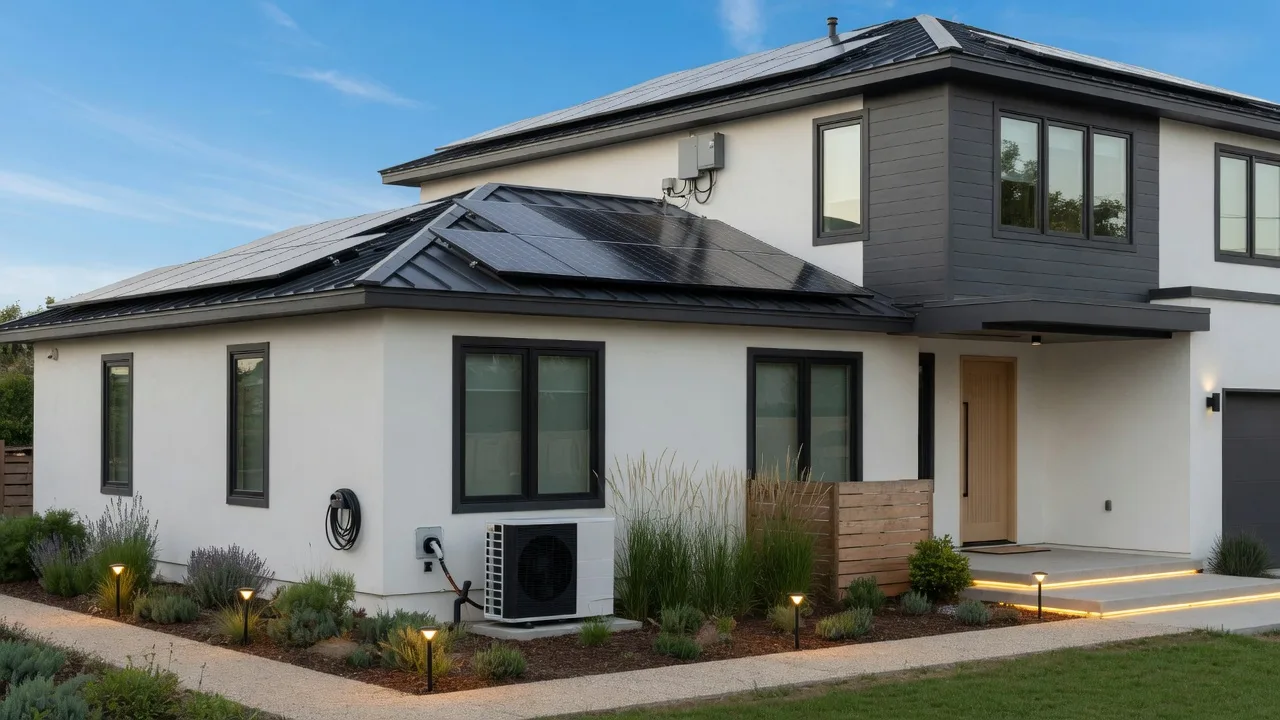
Solar panels convert sunlight into electricity that powers your home. When your panels produce more electricity than you use, the excess is sent to the grid and you earn credits through net metering. When your panels produce less than you need, such as at night or on cloudy days, you draw from the grid and use the credits you accumulated. Over the course of a year, a properly sized system can cover most or all of your electricity needs.
NJ Incentives and Net Metering
New Jersey has a strong net metering policy that credits you at the full retail rate for excess electricity you send to the grid. This makes solar significantly more valuable than in states with less favorable net metering policies. Additionally, New Jersey offers SREC-II and TREC programs that pay you for the renewable energy credits your system generates. These payments are in addition to the electricity savings.
The federal Investment Tax Credit covers 30 percent of the total system cost through 2032. For a typical $20,000 solar installation, that is a $6,000 tax credit. Combined with NJ incentives, net metering savings, and the 30-year lifespan of modern panels, the total financial benefit over the life of the system is substantial.
Cost and ROI
A typical residential solar installation in South Jersey costs $15,000 to $25,000 before incentives, or $10,000 to $18,000 after the federal tax credit. Most homeowners recoup their investment within 7 to 10 years through electricity savings and incentive payments. Given that solar panels have a 25 to 30 year warranty and often last longer, homeowners enjoy 15 to 20 years of essentially free electricity after the payback period.
Heat Pumps and High-Efficiency HVAC Systems
Your heating and cooling system accounts for about half of your home's total energy use. Upgrading to a high-efficiency system is one of the most impactful energy improvements you can make.
Heat Pumps
Heat pumps are becoming increasingly popular in South Jersey, and for good reason. Unlike a furnace that burns fuel to create heat, a heat pump moves heat from one place to another. In winter, it extracts heat from the outside air and brings it inside. In summer, it reverses and extracts heat from inside your home and moves it outside. This makes heat pumps incredibly efficient, delivering two to four times more energy than they consume.
Modern cold-climate heat pumps work effectively in South Jersey winters, where temperatures rarely drop below the range where heat pumps struggle. A heat pump can replace both your furnace and air conditioner, simplifying your HVAC system. Installation costs $5,000 to $12,000 depending on the system size and complexity. The NJ Clean Energy Program offers rebates for heat pump installations, and the federal tax credit covers 30 percent of the cost.
High-Efficiency Furnaces and Air Conditioners
If a heat pump is not the right choice for your home, a high-efficiency furnace and air conditioner are excellent alternatives. Look for furnaces with AFUE ratings of 95 percent or higher, meaning 95 percent of the fuel is converted to heat. For air conditioners, look for SEER2 ratings of 16 or higher. The higher the rating, the more efficient the system and the lower your energy bills.
HVAC Maintenance for Efficiency
Even the most efficient HVAC system will waste energy if it is not properly maintained. Change filters every one to three months. Schedule annual professional maintenance for both heating and cooling systems. Clean the outdoor condenser unit and keep it free of debris. Seal and insulate ductwork in unconditioned spaces like attics and crawl spaces. These simple maintenance tasks can improve system efficiency by 15 to 20 percent.
NJ Clean Energy Program Rebates and Incentives
New Jersey offers some of the most generous energy efficiency incentives in the country. Understanding and using these programs can reduce your upgrade costs by 30 to 50 percent or more.
NJ Comfort Partners Program
This program provides free energy-saving upgrades to income-eligible homeowners, including insulation, air sealing, efficient lighting, and refrigerator replacement. If you qualify, the upgrades are provided at no cost. Check eligibility on the NJ Clean Energy Program website.
Home Performance with ENERGY STAR
This program offers rebates for comprehensive energy upgrades completed through a participating contractor. Start with an energy audit, and the program covers up to 50 percent of the cost of recommended improvements, including insulation, air sealing, and HVAC upgrades. The maximum rebate is typically $4,000 to $5,000 per home.
Individual Upgrade Rebates
The NJ Clean Energy Program also offers rebates for individual upgrades. Heat pump rebates range from $500 to $1,500. High-efficiency furnace rebates are $300 to $800. Central AC rebates are $200 to $500. Insulation rebates cover up to 50 percent of the cost. These rebates are in addition to the federal tax credits available under the Inflation Reduction Act, which covers 30 percent of the cost of heat pumps, insulation, solar panels, and other upgrades.
Federal Tax Credits
The Inflation Reduction Act expanded and extended federal tax credits for energy efficiency upgrades. Through 2032, you can claim 30 percent of the cost of heat pumps, heat pump water heaters, insulation, windows, doors, and solar panels, up to annual limits for some categories. These credits are non-refundable but carry forward to future tax years. Combining NJ rebates with federal tax credits can reduce the net cost of major upgrades by 40 to 60 percent.
Payback Timeline for Each Upgrade
Understanding how long it takes for each upgrade to pay for itself helps you prioritize your investments. Here are realistic payback timelines for South Jersey homes, based on average energy costs and typical upgrade costs.
The best return of any energy upgrade. Low cost, immediate savings, and often the biggest impact on comfort.
Low cost, easy installation, and 10 to 15 percent savings on heating and cooling. Many utilities offer rebates.
The quickest payback of all. LEDs pay for themselves in months, and smart plugs eliminate phantom power drain.
Higher upfront cost offset by NJ rebates and federal tax credits. Significant annual savings on heating and cooling.
The longest payback but the largest lifetime savings. After payback, 10 to 20 years of essentially free electricity.
Longest payback of common upgrades. Only replace windows if they are single-pane, damaged, or beyond repair.
Frequently Asked Questions
Honest answers to the questions South Jersey homeowners ask most about energy efficiency upgrades.
How much can I save by making my home more energy efficient?
Is a home energy audit worth the cost?
Do solar panels make sense in New Jersey?
Should I replace my windows or just weatherstrip them?
What NJ incentives are available for energy upgrades?
What is the single most cost-effective energy upgrade?
Related Homeowner Resources
These guides will help you make your South Jersey home more efficient and comfortable.
Utility Costs: How to Lower Your Monthly Bills
South Jersey utility providers, energy efficiency tips, water conservation, and seasonal strategies to reduce your monthly bills.
Read ArticleHome Improvements That Add the Most Value
Data-driven guide to which renovations deliver the strongest return on investment in South Jersey.
Read ArticleAsk Bob About Energy Savings
Get personalized advice from Bob about energy efficiency upgrades for your South Jersey home. No pressure, just honest guidance.
Ask Now