Understanding Your
Property Taxes
New Jersey has some of the highest property taxes in the country, and understanding how they work is essential for every homeowner. This guide explains how taxes are calculated, what your tax bill actually says, when you can appeal, and what Burlington County homeowners should know.
Property taxes are the single largest ongoing expense of homeownership for most New Jersey residents, and they are also the most misunderstood. If you are a homeowner in Burlington County or anywhere in South Jersey, your property tax bill is likely higher than what you would pay in most other states. Understanding how it works is not just interesting. It can save you money.
I have helped more than 600 families buy and sell homes in South Jersey, and I have seen the confusion that property taxes cause. Homeowners receive a tax bill every quarter, but most do not know how the number was calculated, whether it is fair, or what to do if they think it is too high. This guide is designed to change that.
Whether you are a new homeowner trying to understand your first tax bill, or a long-time resident wondering if you are paying too much, this guide will give you the knowledge you need to navigate New Jersey's property tax system with confidence.
If you are preparing to buy a home, also read our Preparing Your Home to Sell guide for insights on how taxes affect your selling strategy. New homeowners should also check out Your First 30 Days as a Homeowner for the full picture of homeowner costs.
How Property Taxes Work in New Jersey
At its simplest, your property tax bill is the product of two numbers: your property's assessed value and your municipality's tax rate. But understanding how those numbers are set, and who sets them, is where the real knowledge lives.
Your property tax bill supports three main levels of government: your municipality (town or township), your school district, and your county. In Burlington County, the county portion covers services like county roads, parks, and the county court system. The municipal portion covers local services like police, fire, trash collection, and road maintenance. The school portion is typically the largest share, often 50 to 60 percent of the total bill. There may also be a small portion for a fire district or library if your town has one.
The tax rate is calculated by dividing the total amount of money the municipality, school district, and county need to raise by the total assessed value of all taxable property in the municipality. The result is expressed as a rate per $100 of assessed value. For example, if a town needs to raise $10 million and the total assessed value of all properties is $500 million, the tax rate would be $2.00 per $100 of assessed value. A home assessed at $250,000 would pay $5,000 in property taxes.
In New Jersey, property taxes are typically paid quarterly. The due dates are February 1, May 1, August 1, and November 1. Many municipalities offer a grace period of about 10 days. If you have an escrow account as part of your mortgage, your lender collects one-twelfth of your estimated annual taxes with each monthly mortgage payment and pays the tax bill on your behalf. This is the most common arrangement for homeowners with a mortgage.
How Are Property Taxes Calculated?
The formula is straightforward, but the inputs are determined by a complex process that involves elected officials, appointed assessors, and the real estate market. Here is how it breaks down.
Assessed Value
The value your municipal tax assessor places on your property. In New Jersey, the law requires assessments to be at or near 100 percent of true market value. However, many municipalities have not done a full revaluation in years, so your assessed value may be significantly different from your home's actual market value. The key is not whether your assessment matches the market, but whether it is fair compared to similar properties in your town.
Tax Rate
Set annually by each municipality based on the budget needed to fund schools, local services, and county government. The tax rate is expressed in dollars per $100 of assessed value. It can go up or down each year depending on budgets and changes in the total assessed value of all properties in the town.
The Calculation
Your annual tax bill = Assessed Value / 100 x Tax Rate. For example, if your home is assessed at $250,000 and your municipal tax rate is $2.50 per $100 of assessed value, your annual tax bill is $6,250. This is a simplified example. Your actual bill includes separate rates for municipal, school, and county portions.
Effective Tax Rate
The effective tax rate is your annual tax bill divided by your home's market value. This is the most useful number for comparing tax burdens between towns. In Burlington County, effective rates range from about 1.8 percent to 3.0 percent, depending on the municipality. The statewide average in New Jersey is around 2.4 percent, which is the highest in the United States.
Assessment vs Market Value: What's the Difference?
This is the most common source of confusion among homeowners. Your assessed value and your market value are two different numbers, and they do not have to match. Here is what each one means and why the difference matters.
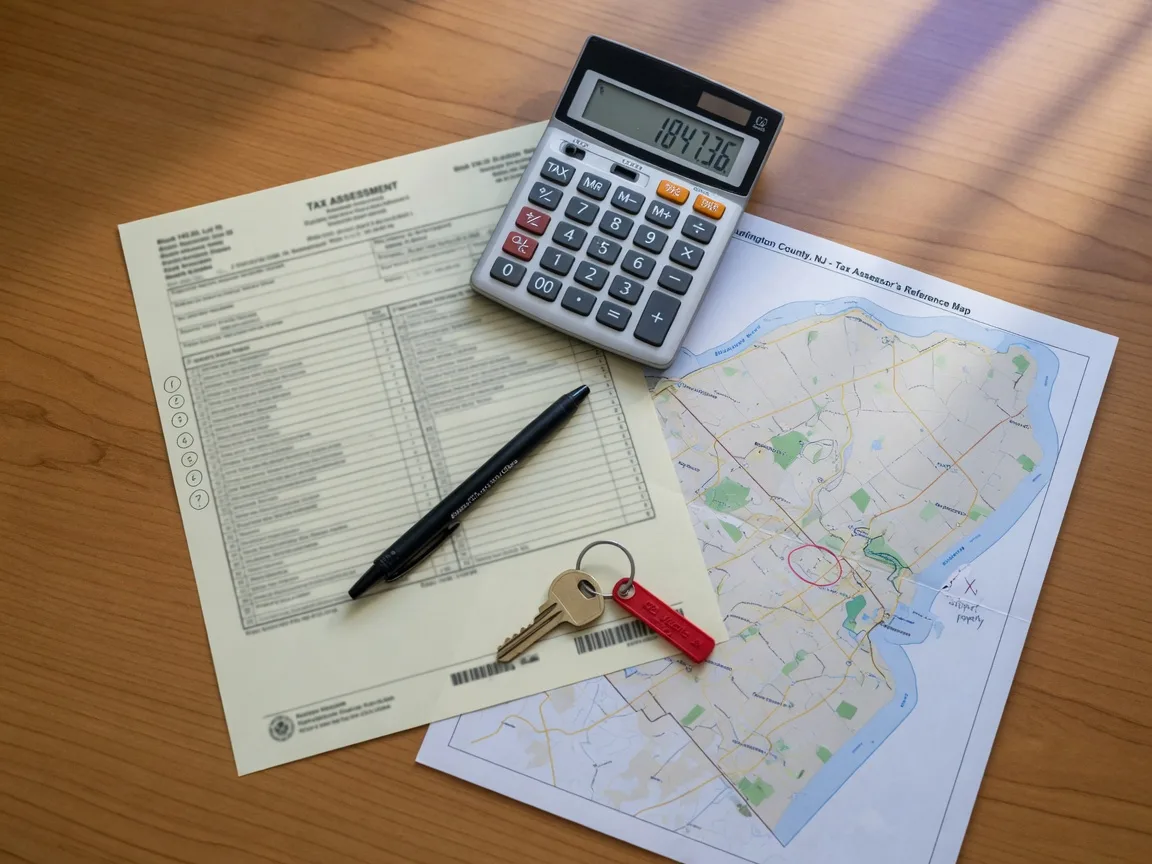
Market value is what a willing buyer would pay a willing seller for your home in the current real estate market. It is determined by comparable sales, market conditions, location, condition, and demand. It changes constantly. If you sold your home today, the price you would get is its market value. This is the number that matters when you are buying or selling a home.
Assessed value is the value assigned to your property by the municipal tax assessor for the purpose of calculating your property tax bill. It is supposed to reflect market value, but it is only updated when the municipality conducts a revaluation or reassessment. In towns that have not done a revaluation in many years, assessments can be significantly lower than market values. This does not necessarily mean you are paying less tax, because the tax rate adjusts to compensate.
What matters for fairness is not whether your assessment matches the market, but whether your assessment is consistent with assessments of similar properties in your town. If your neighbor's identical home is assessed at 20 percent less than yours, you are paying more than your fair share, even if your assessment is below market value. This is the basis for most successful tax appeals.
How to Read Your Tax Bill
Your property tax bill contains a lot of information beyond just the amount you owe. Knowing how to read it helps you verify accuracy, prepare for an appeal, and understand where your money is going.
Your tax bill shows the property's block and lot number, the owner's name and address, the assessed value of the land and the improvements (buildings) separately, the total assessed value, the tax rate, the amount due for each taxing entity, the total amount due, and the payment due dates. It also shows the previous year's taxes for comparison. Check that the block and lot number matches your deed. An error in the property description can mean you are paying taxes on the wrong piece of land.
The bill breaks down your tax payment into the municipal portion, the school portion, the county portion, and any special district levies (fire district, library, etc.). The school portion is typically the largest. In Burlington County, school taxes often account for 50 to 60 percent of the total. The municipal portion covers local services like police, fire, roads, and trash collection. The county portion funds county-wide services.
Each tax bill shows the previous year's total for comparison. If your bill increased significantly, there are three possible reasons: your assessment increased, the tax rate increased, or both. Understanding which one changed helps you decide whether an appeal is appropriate. If your assessment stayed the same but the tax rate went up, an appeal will not help because the rate applies to all properties equally.
The Tax Appeal Process
If you believe your property is assessed at a higher value than similar properties in your town, you have the right to appeal. The process is straightforward, but it requires preparation and evidence. Here is how it works in Burlington County.
The basis for an appeal is that your assessment is too high compared to similar properties. You need evidence. Start by looking up the assessed values of comparable homes in your neighborhood. Comparable homes should be similar in size, age, condition, and location. If you find that your assessment is significantly higher than similar homes, you have a case. You can also get a professional appraisal, which is stronger evidence but costs $400 to $600.
In New Jersey, you must file your tax appeal by April 1 of the tax year. If your municipality has a different tax calendar, you have 45 days from the date the tax bill is mailed. File with the Burlington County Board of Taxation. The filing fee is modest, typically $25 to $50. You will need to complete a form (State Form PTR or your county's equivalent) and attach your evidence. For properties assessed over $1 million, appeals go directly to the New Jersey Tax Court.
Before filing a formal appeal, call or email your municipal tax assessor. Many issues can be resolved informally. The assessor can explain how your assessment was determined and may agree to adjust it if your evidence is compelling. This saves everyone time and paperwork. I have seen this work for homeowners who simply took the time to understand their assessment and present their case clearly.
If your appeal is successful, your assessment is reduced, and your tax bill is adjusted accordingly. The reduction applies to the current tax year and future years until the next reassessment. You may also receive a refund for taxes already paid in the current year. The refund amount depends on when your appeal is decided. Most successful appeals result in modest savings, but even a $200 per year reduction adds up over time.
Burlington County Specific Tax Information
Property tax rates vary significantly across Burlington County. Understanding these differences helps you make informed decisions about where to buy and how to budget for your current home.
In Burlington County, property tax rates vary widely from one town to the next. Towns with higher property values, like Moorestown and Mount Laurel, often have lower tax rates because the tax base is spread across more value. Towns with lower property values or higher service needs may have higher rates. School districts are the biggest driver of rate differences. If you are considering buying a home in a different town, compare the effective tax rates, not just the assessed values.
Property taxes directly affect home values. In areas with higher taxes, buyers typically offer less for a home because the monthly carrying cost is higher. This is why two identical homes in different towns can have significantly different market values. When you are buying, always factor the property tax bill into your monthly budget. A lower purchase price can be offset by much higher taxes, and vice versa. I always include a tax analysis in my buyer consultations.
When you are looking at homes in Burlington County, always ask about the current property tax bill. The listing agent should provide this information. Compare the tax bill as a percentage of the purchase price across different properties. A home with a $5,000 tax bill and a $400,000 price has an effective rate of 1.25 percent, while a home with a $7,000 tax bill and the same price has a rate of 1.75 percent. That $2,000 difference per year is $167 per month, which affects your mortgage qualification.
Tax Deductions for Homeowners
Property taxes are deductible on your federal income tax return, but the rules changed significantly in 2017. Here is what you need to know as a New Jersey homeowner.
The Tax Cuts and Jobs Act of 2017 capped the state and local tax (SALT) deduction at $10,000 per year for married couples filing jointly and single filers. This means you can deduct up to $10,000 in combined state income taxes and property taxes. For New Jersey homeowners, where property taxes alone often exceed $10,000, this cap means many people cannot deduct their full property tax bill. You can only claim this deduction if you itemize your deductions on Schedule A of your federal tax return.
The standard deduction for 2026 is substantial, so many homeowners no longer benefit from itemizing. You should itemize only if your total itemized deductions (mortgage interest, property taxes, charitable contributions, and other deductions) exceed the standard deduction. A tax professional can help you determine which approach saves you more money. For most New Jersey homeowners with a mortgage, itemizing still makes sense, but the SALT cap reduces the benefit.
Mortgage interest on up to $750,000 of acquisition debt is also deductible if you itemize. This is separate from the property tax deduction and is not subject to the SALT cap. For most homeowners, mortgage interest is the larger deduction. Combined with the property tax deduction, these two deductions are the primary reason homeowners benefit from itemizing.
Common Misconceptions About Property Taxes
Over the years, I have heard the same misconceptions about property taxes from buyers and sellers. Here are the facts.
Not necessarily. Your assessment and the tax rate are separate. If your assessment stays the same but the tax rate increases, your bill can go up even if your home value has declined. The tax rate is driven by the budget needs of the municipality and school district, not by individual property values.
Not directly. The purchase price can influence the assessment if the sale triggers a review, but the assessor is supposed to determine value based on the property itself, not the transaction price. In practice, municipalities often use recent sales data to update assessments, but a high purchase price does not automatically mean a higher assessment.
Filing a tax appeal costs $25 to $50, and you do not need a lawyer for small cases. Many homeowners successfully appeal their assessments by providing comparable sales data. The process is straightforward, and even a modest reduction saves you money year after year.
New Jersey offers several property tax relief programs for seniors, including the Senior Freeze (Property Tax Reimbursement) program and the homestead benefit. However, these programs have income limits and application requirements. Not every senior qualifies, and the programs require annual applications. Check with the New Jersey Division of Taxation for current eligibility criteria.
Frequently Asked Questions
Honest answers to the questions Burlington County homeowners ask most about property taxes.
What is the average property tax rate in Burlington County?
How often are properties reassessed in New Jersey?
What is the difference between assessed value and market value?
Can I deduct my property taxes on my federal income tax return?
How do I file a tax appeal in Burlington County?
Do property taxes ever go down?
Key Takeaways
Your property tax bill is calculated by multiplying your assessed value by the tax rate. Understanding both numbers helps you determine if your bill is fair.
Assessed value and market value are different. What matters for fairness is whether your assessment is consistent with similar properties in your town.
You can appeal your assessment if you have evidence that comparable properties are assessed at a lower percentage of their market value. The process is simple and inexpensive.
Property tax rates vary significantly by municipality in Burlington County. Always factor taxes into your buying decision and monthly budget.
The SALT deduction cap limits how much property tax you can deduct on your federal return. Consult a tax professional to understand your specific situation.
Suggested Related Articles
These guides and resources will help you continue building your homeowner knowledge.
Home Improvements That Add the Most Value
A data-driven look at which renovations give you the best return on investment, including how improvements affect your tax assessment.
Read ArticlePreparing Your Home to Sell
A complete guide to getting your home ready for the market, including how taxes affect your pricing strategy.
Read ArticleUnderstanding Your Home Warranty
What is covered, what is not, and how to get the most from your home warranty through every season.
Read Article