Moving Checklist
A Stress-Free Guide
Moving is one of the most stressful life events, but it does not have to be. This comprehensive timeline covers everything from 8 weeks before your move to your first week in your new home, so nothing falls through the cracks.
Moving is frequently ranked as one of the most stressful life events, right up there with divorce and job loss. But it does not have to be that way. The difference between a chaotic, exhausting move and a smooth, organized one is almost always preparation.
I have helped hundreds of families move into and out of homes in Burlington County and South Jersey. I have seen what works and what does not. This checklist is the system I recommend to every client, refined over years of experience. Follow it, and you will walk into your new home on moving day with everything under control.
This guide covers the full timeline: 8 weeks before the move, 6 weeks, 4 weeks, 2 weeks, 1 week, moving day itself, and your first week in the new home. Each section has specific tasks you can check off as you go. Print this out or save it to your phone, and work through it week by week.
If you are a first-time homebuyer, start with Your First 30 Days as a Homeowner for a complete guide to what comes after the move. And for maintaining your new home, see Setting Up Your Home Maintenance Schedule.
8 Weeks Before Moving
Eight weeks out is the time to lay the groundwork. The tasks here are mostly administrative and organizational. Doing them now means you will not be scrambling later.
Keep all your moving documents, contracts, checklists, and receipts in one place. Use a physical binder or a cloud-based folder, whichever you prefer. This single habit will save you hours of searching for papers later.
Research and compare professional movers. Ask for in-home estimates rather than over-the-phone quotes. Check reviews on Google, Yelp, and the Better Business Bureau. Confirm that the company is licensed and insured. Book your movers as soon as you decide, as good companies book up weeks in advance, especially during the spring and summer moving season.
The less you have to move, the cheaper and easier the move will be. Go through every room and sort items into four piles: keep, donate, sell, and toss. Be honest with yourself about what you actually use. Start with rooms you use least, like the attic, basement, and guest room, and work your way to the everyday spaces. Host a yard sale or list items on Facebook Marketplace for extra cash.
Check your lease for the required notice period, typically 30 to 60 days. Provide written notice according to the lease terms. Request a move-out inspection walkthrough and ask about the process for getting your security deposit back.
Measure the dimensions of each room in your new home and the width of doorways, hallways, and stairs. Compare these measurements to your largest furniture pieces. This prevents the awful moment of realizing your sofa does not fit through the front door. Create a floor plan and decide where each piece of furniture will go.
Gather boxes in various sizes, packing tape, bubble wrap, packing paper, markers, and labels. You can buy boxes from moving supply stores, U-Haul, or Home Depot, or get free boxes from local stores, liquor stores, and grocery stores. Start collecting early so you have enough when packing begins in earnest.
6 Weeks Before Moving
Six weeks out is when the administrative work ramps up. Book your services and start the paperwork that takes time to process.
Contact your electricity provider (PSE&G or Atlantic City Electric), gas provider (South Jersey Gas or PSE&G), water utility, and internet/cable provider. Schedule disconnection at your old home for the day after you move out, and connection at your new home for the day before you move in. This ensures you have power, heat, and water on moving day. Internet installation appointments can be hard to get, so book early.
Go to usps.com and set up mail forwarding. It costs a small fee and takes effect within a few days. Mail forwarding lasts for one year. This gives you time to update your address with every organization. Do not skip this step, as it catches the things you forget to update.
Start notifying your employer, bank, credit card companies, insurance providers, doctors, dentists, and any subscription services about your address change. Create a list and check it off as you go. This is also a good time to notify your children's school if you are moving to a new school district.
Start looking into the services you will need in your new neighborhood: a primary care doctor, a dentist, a pharmacy, a veterinarian if you have pets, a bank branch, a grocery store, and a gas station. The HomeCircle Trusted Partners directory is a great place to find vetted service providers in Burlington County and South Jersey.
Start packing things you will not need in the next six weeks: seasonal decorations, off-season clothing, books you are not reading, extra kitchen gadgets, and items from the attic and basement. Label each box clearly with its contents and the room it belongs in. This spreads the work out so you are not packing everything in the final week.
4 Weeks Before Moving
The one-month mark is when things start feeling real. Confirm your arrangements and step up the packing.
Call your moving company to confirm the date, time, and details. Review the contract, including the estimated cost, payment terms, insurance coverage, and cancellation policy. Confirm whether they provide packing services or if you are handling packing yourself. If you need to rent a truck, reserve it now.
New Jersey requires you to update your driver's license and vehicle registration within 60 days of moving. Visit the New Jersey Motor Vehicle Commission website to find the nearest agency and make an appointment. Bring your proof of address and current documents.
Visit the New Jersey Division of Elections website to register to vote at your new address. You can do this online. This is especially important if you are moving close to an election. Voter registration deadlines are typically 21 days before an election.
Moving day is chaotic, with doors open, strangers coming and going, and a lot of activity. Arrange for a friend, family member, or pet sitter to watch your pets and young children on moving day. This keeps them safe and out of the way, and it reduces your stress significantly.
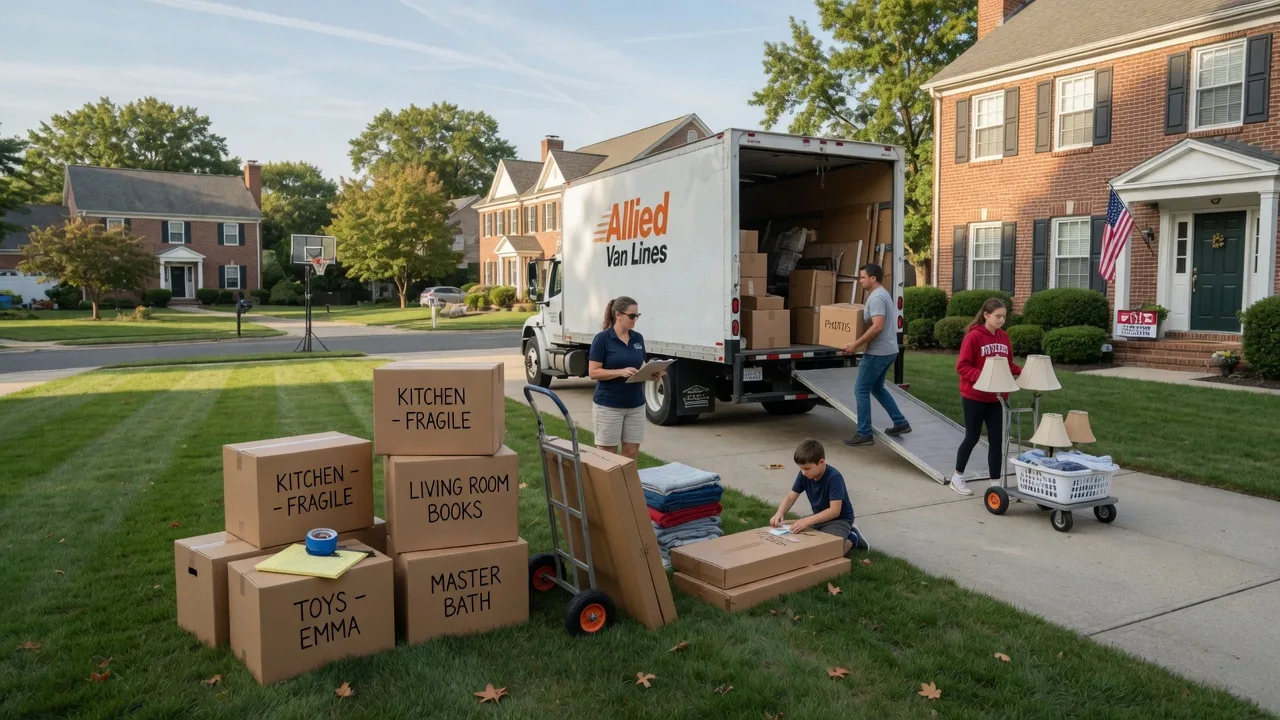
Pack room by room and label each box with the room name, contents, and a priority level. Use colored tape or stickers for different rooms. Mark boxes that are fragile. Keep an inventory list of what is in each box. This makes unpacking infinitely easier and helps you find things quickly when you need them.
2 Weeks Before Moving
Two weeks out is when you need to be fully in packing mode. Finish the big administrative tasks and start preparing for the final days.
Contact your homeowners insurance agent to transfer your policy to the new address. The rate may change based on the new location. Also update your auto insurance with your new address. If you are moving to a different state, you may need to switch insurance providers entirely.
If you are selling your home, you may need to have it professionally cleaned after you move out. If you are renting, check your lease for move-out cleaning requirements. Some people also hire cleaners for their new home before moving in, which is a great way to start fresh.
Start eating through your freezer, refrigerator, and pantry. Do not buy new groceries. Plan meals around what you already have. This reduces waste, saves money, and means you will have less to move or throw away. Donate unopened non-perishable items to a local food bank.
Pack a separate box or suitcase with everything you will need on your first night: toiletries, medications, a change of clothes, pajamas, phone chargers, basic tools, snacks, water, coffee, bedding, pillows, and a flashlight. Keep this box with you in the car, not in the moving truck. This simple preparation makes the first night comfortable when you are exhausted.
Confirm the moving company's arrival time, confirm your rental truck reservation if DIY, confirm parking arrangements at both locations, and confirm that any friends or family helping on moving day are available. If you need parking permits for the moving truck at either location, arrange them now.
1 Week Before Moving
The final week is about finishing, not starting. Complete your packing, handle the last details, and prepare for moving day.
By now, you should be down to the essentials you need for the final week. Pack everything else. The only things left should be what you use daily: clothes for the week, toiletries, basic kitchen items, and important documents. Pack these separately on moving day morning.
Empty your refrigerator and freezer. Defrost the freezer if it has ice buildup. Clean the interior and leave the doors open to air dry. This prevents mold and odors during the move. If you are moving the refrigerator, this is also required by movers to prevent water damage during transport.
Set aside a bag with a few days of clothes, toiletries, medications, phone chargers, important documents (passports, birth certificates, deeds, tax returns), and valuables. Keep this with you at all times, not in the moving truck. This bag is your lifeline if anything goes wrong with the move.
Give your current neighbors a heads up about moving day, especially if the moving truck will block the street or driveway. A friendly note with your phone number goes a long way. If you know your new neighbors, introduce yourself in advance or leave a note too.
Confirm with the moving company, utility companies, cleaners, and any other service providers that everything is on schedule. Double-check that utilities will be on at your new home on moving day. Confirm the disconnection schedule at your old home for the day after the move.
Moving Day Checklist
Moving day is the culmination of weeks of preparation. If you have followed the checklist, today is about execution, not panic. Here is how to make it go smoothly.
Morning of the Move
Eat a good breakfast and stay hydrated. Do a final walkthrough of your old home to make sure nothing is left behind. Check closets, cabinets, the attic, basement, garage, and outdoor spaces. Take photos of the empty home for your records. Lock all windows and doors behind you. Give the keys to the new owner or landlord.
Working with Movers
Be present when the movers arrive. Walk through the home with the crew leader and point out fragile items, heavy items, and any special handling requirements. Have water and snacks available for the movers. Stay out of their way while they work, but be available to answer questions. Check the inventory list as items are loaded.
At the New Home
Make sure utilities are on before movers arrive. Walk through the new home first to confirm it is clean and ready. Direct movers to the correct rooms. Check boxes for damage as they are unloaded. Do a quick inventory to make sure everything arrived. Keep your first-night box accessible. Take photos of any damage immediately.
After the Move
Pay the movers and tip them if they did a good job. Do a final walkthrough of the new home to make sure everything is in the right place. Set up your bed and make it before anything else. Make your first-night box accessible. Order dinner from a local restaurant. You have earned it. Tomorrow is for unpacking.
First Week in Your New Home
The first week is about turning a house into a home. Focus on the essentials first, then work through the rest at a comfortable pace. You do not need to unpack everything at once.
Utility Transfers and Provider Contacts
Transferring utilities is one of the most important administrative tasks of moving. Missing a transfer can mean arriving at your new home with no heat, no water, or no internet. Here is a quick reference for South Jersey providers.
Electricity
PSE&G serves most of Burlington County. Atlantic City Electric serves some southern areas. Call at least two weeks before your move to schedule the transfer. You will need your new address, move-in date, and account number from your current provider.
Gas
South Jersey Gas serves most of Burlington County. Some areas are served by PSE&G. Call to transfer service. If you are moving into a home with gas heat, make sure the gas is turned on and the pilot lights are lit before you need heat.
Water and Sewer
Water service is typically provided by the municipal utility or a local water authority. Contact your municipality's water department or the Burlington County Water Authority to set up service. Some towns handle this through the local tax office.
Internet and Cable
Verizon Fios, Xfinity, and Comcast all serve parts of Burlington County. Check availability at your new address and schedule installation at least two weeks in advance. Installation appointments during peak moving season can be hard to get.
Address Change Checklist
Changing your address with every organization that sends you mail or needs to find you is a tedious but essential task. Here is a comprehensive list of who to notify.
Frequently Asked Questions
Honest answers to the questions homeowners ask most about moving.
How far in advance should I start planning a move?
Should I hire professional movers or rent a truck?
How do I change my address?
What utilities do I need to transfer when moving?
What should I pack in a "first night" box?
How do I find reliable local services in my new neighborhood?
Key Takeaways
Start planning at least 8 weeks before your move. The earlier you begin, the less stressful the process will be. Spread the work across weeks rather than cramming it into the final days.
Declutter before you pack. The less you have to move, the cheaper and easier the move will be. Be ruthless about what you actually need and use.
Schedule utility transfers two weeks in advance. Schedule disconnection at your old home for the day after you move out and connection at your new home for the day before you move in.
Pack a first-night box with everything you need for your first 24 hours. Keep it with you in the car, not in the moving truck. This simple step makes the first night comfortable.
Change your address with USPS, your bank, insurance, DMV, employer, and all other important contacts. Use the first week in your new home to set up essentials and introduce yourself to neighbors.
Suggested Related Articles
These guides and resources will help you continue building your homeowner knowledge.
Your First 30 Days as a Homeowner
A day-by-day guide to your first month of homeownership, from changing locks to setting up utilities to finding trusted service providers.
Read ArticleSetting Up Your Home Maintenance Schedule
A simple calendar system to keep your home in great shape without feeling overwhelmed, month by month and season by season.
Read ArticleUnderstanding Your Home Warranty
What is covered, what is not, and how to get the most from your home warranty when you move into a new home.
Read Article