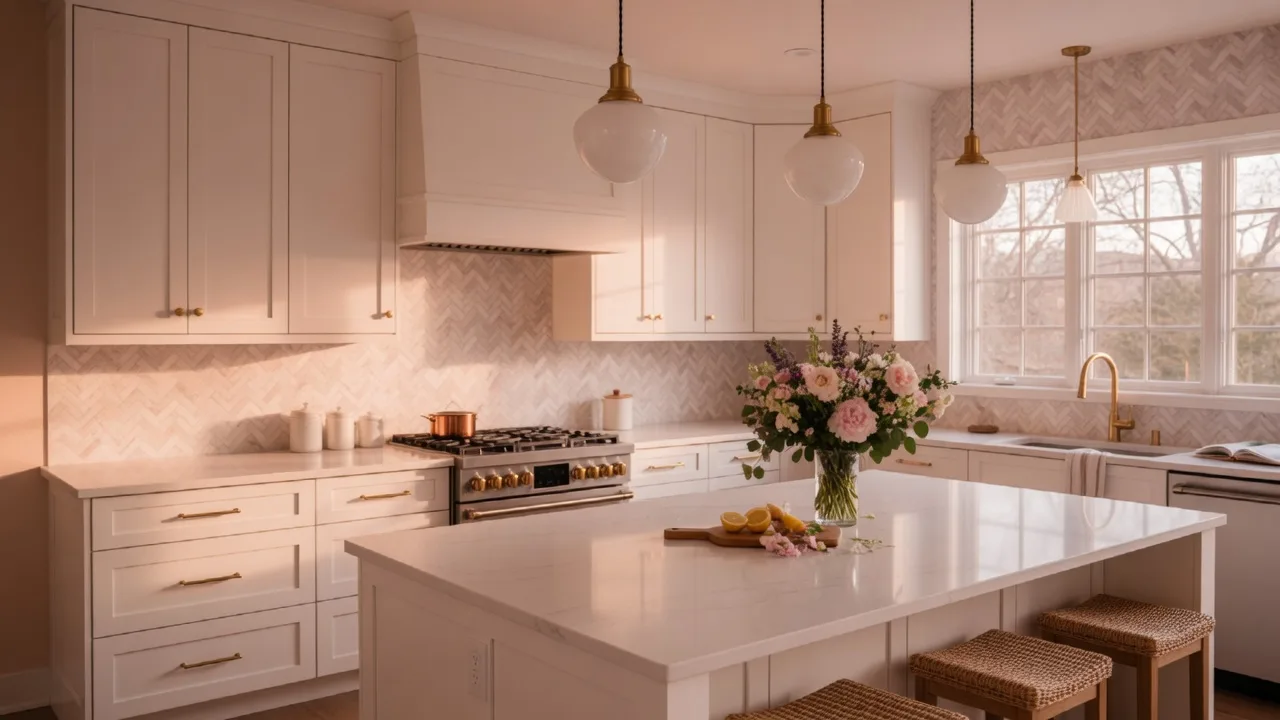
Kitchen Renovation:
Where to Start
The kitchen is the heart of your home, and renovating it is one of the most rewarding projects you can take on. Here is how to plan, budget, and execute with confidence in South Jersey.
A kitchen renovation is exciting, overwhelming, expensive, and deeply rewarding, often all at once. It is the room where your family gathers every morning and evening, where meals are prepared and memories are made, and it is the space that buyers scrutinize most closely when it comes time to sell.
For South Jersey homeowners in Burlington, Camden, Gloucester, and Mercer counties, a kitchen renovation is one of the most impactful projects you can undertake. But it is also one of the easiest places to overspend, make choices you will regret, or get stuck in decision paralysis. The key is a clear plan, a realistic budget, and an understanding of what matters most for your home and your lifestyle.
This guide walks you through every step of the process, from setting priorities to choosing materials to working with contractors, all with the South Jersey market in mind. Whether you are planning a minor refresh or a full gut renovation, you will find practical advice to help you make confident decisions.
The Planning Phase: Budget, Priorities, and Wants
Before you look at a single tile sample or visit an appliance showroom, you need a plan. The planning phase is where successful renovations are won or lost.
Setting a Realistic Budget
Start by determining your total budget, then add a 15 to 20 percent contingency for unexpected surprises. In a kitchen renovation, surprises are not a matter of if, but when. You might discover outdated wiring when you open the walls, find water damage behind the cabinets, or decide that now is the time to move that plumbing stack.
A good rule of thumb is that a kitchen renovation should cost between 5 and 15 percent of your home's value. For a $350,000 home in Mount Laurel or Medford, that means a budget of $17,500 to $52,500. The wide range reflects the difference between a minor refresh and a full renovation. Most South Jersey homeowners find that a mid-range renovation in the $20,000 to $35,000 range hits the sweet spot of quality and value.
When creating your budget, allocate roughly 30 percent for cabinets and hardware, 15 percent for countertops, 15 percent for appliances, 10 percent for flooring, 10 percent for plumbing and fixtures, 10 percent for electrical and lighting, and 10 percent for labor and permits. These percentages will shift depending on your choices, but they give you a helpful starting point.
Priorities vs. Wants
Every kitchen renovation involves trade-offs. The trick is distinguishing between what you need and what you want. Needs are things that affect the function and safety of the space: adequate counter space, sufficient storage, proper lighting, functional appliances. Wants are the extras: a pot filler over the stove, a built-in wine fridge, custom panel-ready appliances.
Make two lists. Your priority list should include everything the kitchen absolutely must have to work for your family. Your wants list is everything that would be nice to have if the budget allows. When you start getting contractor quotes and the numbers come in higher than expected, the wants list is where you trim first. This approach keeps you from making costly last-minute cuts to things that actually matter.
Measuring Your Space
Before you can compare layouts or materials, you need accurate measurements of your existing kitchen. Measure the length and width of the room, the height of the ceilings, the location of all windows and doors, and the positions of existing plumbing, gas lines, and electrical outlets. A detailed floor plan, even one you sketch yourself on graph paper, will help you communicate with contractors and avoid costly mistakes.
Common Kitchen Layouts for South Jersey Homes
The layout of your kitchen determines how the space functions day to day. In South Jersey, many homes built between 1950 and 2000 have kitchens with layouts that can feel cramped or disconnected from the rest of the living space. Understanding your options helps you make smart decisions about what stays and what changes.
The Work Triangle
The classic kitchen work triangle connects the sink, refrigerator, and stove. Ideally, the distance between each point should be between four and nine feet, and the total perimeter of the triangle should not exceed 26 feet. This principle ensures that the kitchen flows efficiently for the cook. When planning your layout, keep the work triangle in mind, but do not feel locked into it. Many modern kitchens use a multi-zone approach with separate areas for prep, cooking, and cleaning.
Galley Kitchen
Galley kitchens are common in South Jersey rowhomes, condos, and older colonials. They feature two parallel countertops with a walkway between them. Galley layouts are highly efficient for one cook, but they can feel tight if two people need to work at the same time. If you have a galley kitchen, focus on maximizing vertical storage, using light colors to open up the space, and ensuring the walkway is at least 42 inches wide, preferably 48 inches.
L-Shaped Kitchen
The L-shaped layout is one of the most versatile and popular for South Jersey homes. It uses two adjacent walls to create an efficient work zone while leaving the rest of the room open for a dining table, an island, or flow into an adjacent family room. L-shaped kitchens work well in both small and large spaces and are the easiest layout to open up by removing a wall between the kitchen and dining room.
U-Shaped Kitchen
U-shaped kitchens wrap around three walls, offering abundant counter and cabinet space. They are common in larger South Jersey homes and provide excellent storage. The downside is that the corner cabinets in a U-shaped kitchen can be hard to access. Lazy Susans, pull-out drawers, and blind corner cabinets help solve this problem. If your U-shaped kitchen feels closed off, consider removing one leg of the U to create an L-shaped layout with an island.
Kitchen with an Island
Islands are the most requested feature in kitchen renovations, and for good reason. They add counter space, storage, seating, and a natural gathering spot for family and guests. An island needs at least 42 inches of clearance on all sides, ideally 48 inches in a one-cook kitchen. In South Jersey homes with smaller kitchens, a portable butcher block cart can function as a mini island without the commitment of a permanent install.
Open Concept Considerations
Many South Jersey homeowners are opening up their kitchens to adjacent living and dining areas by removing non-load-bearing walls. This can transform a cramped, closed-off kitchen into a bright, social space. Before you start demo, have a structural engineer or contractor confirm which walls are load-bearing. Removing a load-bearing wall requires a beam and proper support, which adds $1,000 to $3,000 to the project but is well worth it for the transformation.
Cabinet Options: Refacing, Replacing, RTA, and Custom
Cabinets are the most visible element of your kitchen and typically the largest line item in your budget. The choices you make here will define the look of your kitchen for years to come.
Refacing vs. Replacing
Cabinet refacing is exactly what it sounds like. You keep the existing cabinet boxes and replace only the doors, drawer fronts, and hardware. A professional can also apply a new veneer to the exposed sides of the boxes to match the new doors. Refacing typically costs 30 to 50 percent less than full replacement and can be completed in a fraction of the time.
Refacing makes sense when your existing cabinets are well built and the layout works for your needs. It is an excellent option for South Jersey homeowners who want an updated look without the cost and disruption of a full gut. Replace the cabinets entirely if the boxes are warped or damaged, if you want to change the layout or add different size cabinets, or if the existing boxes are low-quality particleboard that will not hold up to another 15 years of use.
Ready-to-Assemble (RTA) Cabinets
RTA cabinets are flat-packed and shipped directly to your home. You assemble and install them yourself or hire a contractor to do the assembly. RTA cabinets have come a long way in quality and are now a viable option for many homeowners. Brands like IKEA, Barker, and Cabinet Joint offer solid plywood boxes and dovetail drawer construction at a fraction of the cost of custom cabinets.
For a typical South Jersey kitchen, RTA cabinets cost $3,000 to $8,000, compared to $10,000 to $25,000 for semi-custom and $20,000 to $40,000 for fully custom. The savings are significant, but RTA cabinets require you to manage the assembly and installation process, and lead times can be longer if items are backordered.
Semi-Custom Cabinets
Semi-custom cabinets are manufactured to standard sizes but offer a wide range of finishes, door styles, and modifications. They are the most popular choice for mid-range kitchen renovations in South Jersey. You get the flexibility to choose your finish and make dimensional adjustments without the cost of fully custom cabinetry. Most kitchen showrooms in Burlington County carry semi-custom lines from brands like KraftMaid, Merillat, or Shiloh.
Custom Cabinets
Custom cabinets are built to your exact specifications by a cabinetmaker. They offer unlimited design options, the highest quality materials and construction, and the ability to maximize every inch of your space. Custom cabinets are the right choice for unique kitchen shapes, historic homes with non-standard dimensions, or homeowners who want a truly one-of-a-kind kitchen. For most South Jersey homeowners, however, semi-custom or quality RTA cabinets deliver the look and function you want at a much more accessible price point.
Cabinet Hardware
Do not overlook the hardware. New cabinet pulls and knobs are one of the most cost-effective upgrades you can make. Brushed nickel and matte black are the most popular finishes in South Jersey kitchens today. Budget $200 to $500 for quality hardware, and consider adding soft-close hinges and drawer slides for a premium feel at a modest additional cost.
Countertop Materials Compared
Your countertops take more daily abuse than almost any other surface in your home. Choosing the right material is a balance of durability, maintenance, appearance, and budget.
Granite is a natural stone that has been the gold standard for kitchen countertops for decades. Each slab is unique, offering one-of-a-kind patterns and colors. Granite is heat resistant and durable, but it is porous and requires annual sealing to prevent stains. In South Jersey, granite is still a popular choice, especially in higher-end homes. The main downsides are the maintenance requirement and the fact that the look can feel dated in a few years as trends shift toward more uniform surfaces.
Quartz is the most popular countertop material for new kitchens, and for good reason. It is an engineered stone made from crushed quartz and resin, which means it is non-porous, never needs sealing, and is highly stain resistant. Quartz comes in consistent colors and patterns, including convincing marble looks that are far more durable than real marble. For South Jersey homeowners, quartz offers the best combination of beauty, durability, and low maintenance. The only real downside is that it can be damaged by high heat, so always use trivets for hot pans.
Laminate countertops have come a long way. Modern laminate can convincingly mimic the look of granite, marble, and wood at a fraction of the cost. Brands like Formica and Wilsonart offer hundreds of patterns and colors. Laminate is easy to clean, stain resistant, and budget friendly. The downsides are that it can chip at the seams, it is not heat resistant, and it cannot be repaired if damaged. For rental properties, starter homes, or tight budgets, laminate is a perfectly reasonable choice that can look great when properly installed.
Butcher block countertops add warmth and natural beauty to a kitchen. They are made from strips of wood, typically maple, oak, or walnut, glued together into a solid surface. Butcher block is an excellent choice for islands, breakfast bars, and prep areas. It is gentler on knives than stone surfaces and can be sanded and refinished if it gets scratched or stained. The downsides are that it requires regular oiling, is susceptible to water damage if not properly sealed, and can harbor bacteria if not cleaned thoroughly. In South Jersey kitchens, butcher block works beautifully as an accent material paired with quartz or granite on the perimeter counters.
Choosing Appliances for Your South Jersey Kitchen
Appliances are the workhorses of your kitchen. Choosing the right ones means balancing performance, energy efficiency, size, and budget.
Energy Efficiency Matters
Energy-efficient appliances use less electricity and water, which lowers your monthly utility bills and reduces your environmental impact. Look for the ENERGY STAR label on every appliance you buy. In New Jersey, you may qualify for rebates through the NJ Clean Energy Program when you purchase ENERGY STAR certified appliances. A modern Energy Star refrigerator uses about 15 percent less energy than a 10-year-old model, saving you roughly $50 to $100 per year in electricity costs.
Sizing and Configuration
Standard appliance sizes are 30 inches wide for ranges and refrigerators, 24 inches for dishwashers, and 30 to 36 inches for range hoods. If your kitchen has non-standard dimensions, you may need to adjust your cabinet layout or choose smaller appliances. In many South Jersey homes built before 1980, kitchen spaces were designed for smaller appliances, so measure carefully before ordering. Counter-depth refrigerators, which are shallower than standard models, are popular in renovated kitchens because they sit flush with the cabinets and create a built-in look.
Brand and Finish Considerations
Stainless steel remains the most popular finish for kitchen appliances in South Jersey, and it appeals to the widest range of buyers when you sell. Fingerprint-resistant stainless is worth the premium. If you want a more distinctive look, matte black, slate, and white finishes are also popular. Stick with a consistent brand and finish across all your appliances for a cohesive look. Mid-range brands like Whirlpool, GE, Samsung, and KitchenAid offer the best value for most homeowners.
Working with Contractors
The quality of your contractor will make or break your renovation experience. Taking the time to find, vet, and communicate effectively with your contractor is one of the most important investments you can make in your project.
Finding the Right Contractor
Start by asking neighbors, friends, and your real estate agent for recommendations. In South Jersey, word of mouth is still the most reliable way to find a good contractor. Look for contractors who specialize in kitchen renovations and have a portfolio of completed projects. Verify that they are licensed and insured in New Jersey. The New Jersey Division of Consumer Affairs website lets you check a contractor's license status and any complaint history.
Getting and Comparing Bids
Get at least three written bids for your project. Each bid should include a detailed scope of work, a materials list with brands and model numbers, a timeline with start and completion dates, a payment schedule, and warranty information. Be wary of bids that are significantly lower than the others. A low bid often means the contractor has missed something in the scope or plans to cut corners. A higher bid from an established contractor with strong references is usually the better value.
Timeline Expectations
A minor kitchen refresh typically takes three to five weeks. A full renovation with new cabinets, countertops, flooring, and appliances takes six to ten weeks. Custom cabinets can add four to eight weeks of lead time before installation even begins. Be realistic about the timeline and build in buffer time for unexpected delays. Material shortages, especially for specialty items like custom range hoods or imported tile, can push timelines out by weeks.
Living Without a Kitchen
You will need a plan for meals during your renovation. Set up a temporary kitchen in a spare room, basement, or garage with a microwave, toaster oven, hot plate, slow cooker, and a mini fridge. Use paper plates and disposable utensils to minimize clean up. Plan simple meals, use a grill if weather permits, and take advantage of the many excellent takeout options available throughout Burlington County and South Jersey. The inconvenience is temporary, and the result will be worth it.
ROI: What Kitchen Upgrades Recoup the Most Value
If you are planning to sell your home within the next few years, the return on your kitchen investment matters. Not every upgrade delivers the same value at sale time.
Minor Refresh vs. Major Renovation
In South Jersey, minor kitchen remodels consistently deliver a better return than major renovations. A minor update costing $15,000 to $25,000 typically recovers 60 to 80 percent of its cost at resale. A major renovation costing $40,000 or more recovers only 50 to 65 percent. The smaller investment yields a better percentage return because you are updating the most visible elements without taking on the cost of moving walls, plumbing, or electrical.
Highest ROI Upgrades
A fresh coat of paint on the walls and new cabinet hardware cost under $500 total and can transform the entire look of your kitchen. This is the highest ROI improvement you can make.
Quartz or granite countertops are one of the first things buyers notice. They add significant perceived value and are a strong selling point in any price range.
Matching, modern appliances signal a well-cared-for kitchen. Buyers expect stainless steel, and Energy Star models add appeal for environmentally conscious buyers.
Modern lighting fixtures and a simple subway tile backsplash add polish and make the kitchen feel complete. These are relatively low-cost improvements with strong buyer appeal.
Know Your Neighborhood
The most important ROI factor is your neighborhood. If every home in your area has updated kitchens with quartz countertops and stainless appliances, your kitchen needs to match those expectations just to stay competitive. If you over-improve beyond what is typical for your neighborhood, you are unlikely to recoup the extra investment. Match your finishes to the expectations of buyers in your price range and area.
Frequently Asked Questions
Honest answers to the questions South Jersey homeowners ask most about kitchen renovations.
How much does a kitchen renovation cost in South Jersey?
What is the best countertop material for the money?
Should I reface or replace my kitchen cabinets?
How long does a kitchen renovation take?
What kitchen upgrades give the best return when selling?
Can I live in my house during a kitchen renovation?
Related Homeowner Resources
These guides will help you with your kitchen renovation and other home improvement projects.
Bathroom Upgrades That Add Value
Learn which bathroom improvements deliver the strongest return in the South Jersey market, from simple fixture updates to full remodels.
Read ArticleHome Improvements That Add the Most Value
Data-driven guide to which renovations deliver the strongest return on investment for South Jersey homeowners.
Read ArticleAsk Bob Your Renovation Questions
Get personalized advice from Bob about your kitchen renovation plans. No pressure, just honest guidance from a trusted local expert.
Ask Now